Tuesday, 12 January 2016

Set Up Kissmetrics Without Code: Click to Track Key Events on Your Website

We just launched our event visualization editor, and it’s one of my favorite features because it solves a huge pain point for marketers.

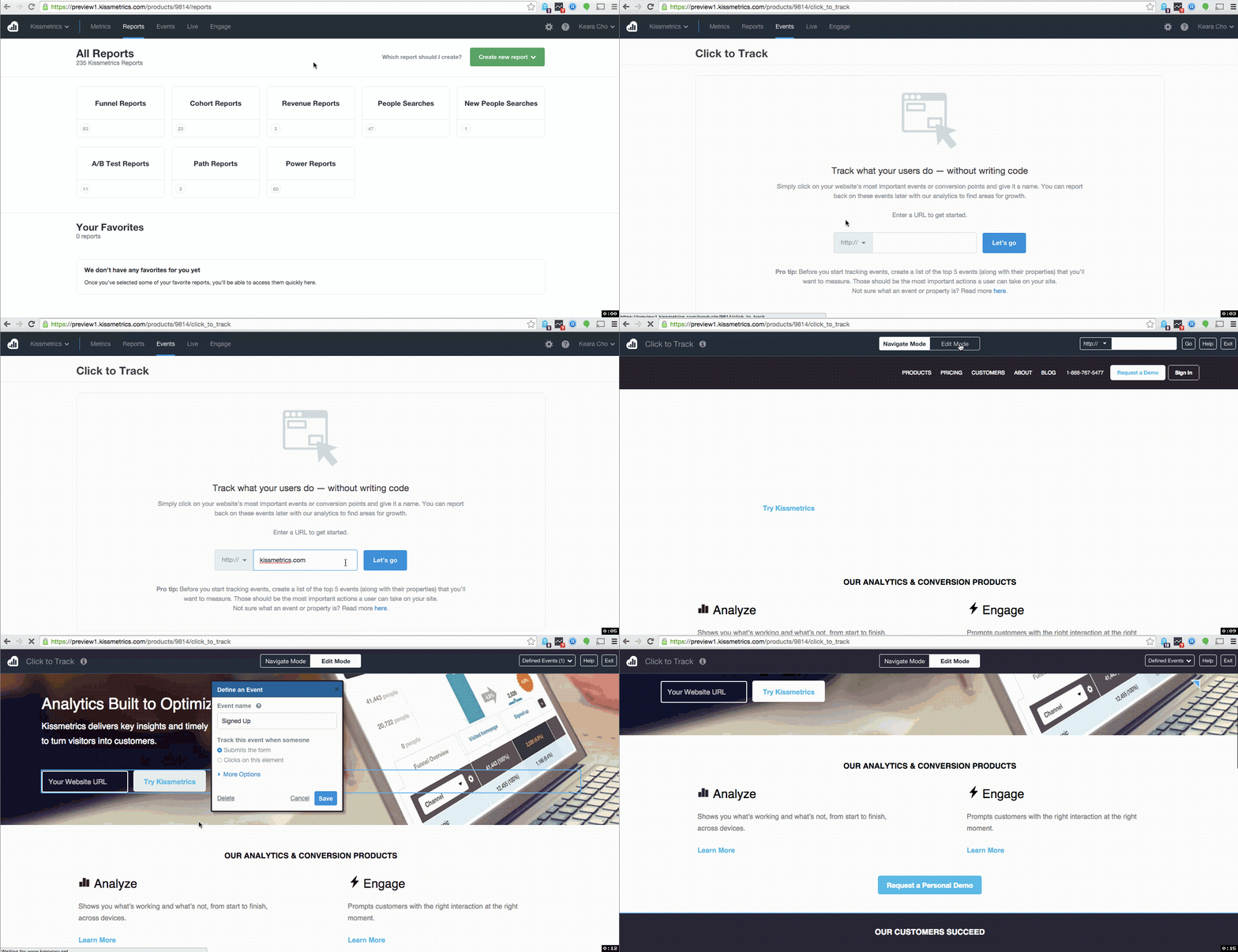
Long gone are the days when marketers had to get prioritized into a sprint to get an analytics tool implemented – and implemented right. With our newest feature, Click To Track, you no longer have to write any code to set up analytics. Simply use your mouse to add events by clicking on key elements of your website. You can find Click to Track via our navigation.

kissmetrics-click-to-track

Check out this video to see how Click to Track works and how to get started:

Event Manager

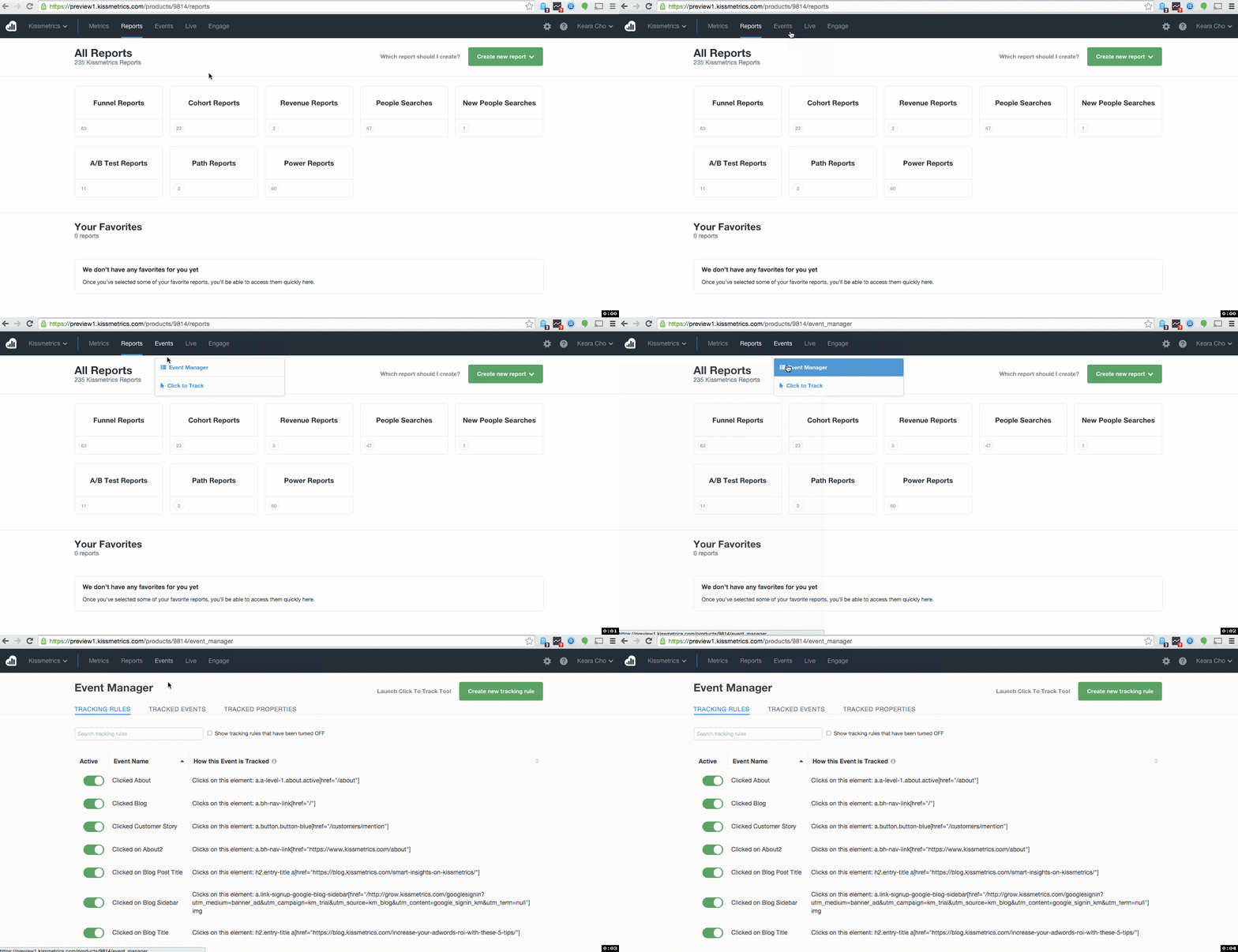
You’ll also notice a new face lift for the “Event Library.” We’ve migrated all your data to this newly improved “Event Manager” tool so your events are more organized and you can work more efficiently.

kissmetrics-event-manager

A note about existing events: if you have events that you’ve set up previously, they will not show up in the “Defined Events” list.

Don’t worry, you didn’t lose any of your tracking or tracking rules – you can find them in the “Event Manager” tool.

With all these enhancements, we hope marketers can now spend more time with their developers and analyze data that matters to their organizations. Setup used to take an afternoon of your development team’s time. Now that you can take setup off your developer’s plate, you can work more efficiently together.

Need more details? Check out our support doc for Click to Track.
Take me to Click to Track now!

About the Author: Keara Cho is the Senior Product Marketing Manager at Kissmetrics.

Monday, 11 January 2016

Why Workforce Diversity Matters to Every Business

When you think of campaigns to increase a company's workforce diversity, you probably think of big corporations with "diversity initiatives" and such. But in reality, even the smallest business can incorporate workplace diversity into its hiring strategy — and can benefit from doing so.

A new study by the Small Business Majority examined diversity in small businesses and reveals that overall, small businesses are doing a great job of hiring ethnically diverse entry-level employees. Workplace diversity in small-business hiring practices is important, because small businesses account for 99 percent of U.S. businesses, or some 56 million employees. Here's some of what the study found:

Seven out of 10 small businesses surveyed have at least one female employee, 24 percent have at least one Hispanic employee, and 18 percent have at least one African-American employee. In addition, 8 percent have at least one employee with a disability, 6 percent have at least one American Indian or Alaskan native employee, and 5 percent have at least one Asian or Pacific Islander employee. About one-fourth report they also have at least one other non-white employee.

These stats are especially impressive considering that the majority (74 percent) of respondents are located in rural or suburban areas, and that 88 percent have 10 or fewer employees. In general, the larger a small business is, the more likely it was to have a more diverse workforce, the survey found.

But there's still some room for improvement when it comes to workplace diversity. The statistics above reflect entry-level employees only; when it comes to upper-level workers, staffs are less diverse. Among the staff beyond entry-level, 35 percent are women, 9 percent are African-American, 8 percent are Hispanic, 6 percent have a disability, 2 percent are American Indian or Alaska natives, 1 percent are Asian Pacific Islanders, and 6 percent are members of another non-white minority group.

Why is increasing workplace diversity important? Incorporating different kinds of people into your team gives you broader perspectives on everything from marketing and management to new product or service ideas. It's human nature to feel comfortable with those who are similar to us, so it's commendable that so many entrepreneurs are already hiring relatively diverse teams.

Ethnicity and gender aren't the only types of workplace diversity we should be considering. Hiring employees in different age groups, from Generation Z on up to seniors, can also help your business gain depth and profit from different generations' different skills and outlooks. I was also happy to see that employees with disabilities are represented in the survey, as these individuals often struggle to find employment. More and more big companies are recognizing the value that employees with all types of disabilities can bring to the table. For example, SAP and Microsoft have both started programs to recruit employees on the autism spectrum, whose special skills are often a great fit with technology work.

Nearly one-third (29 percent) of small business owners in the survey say they plan to increase the diversity of their upper-level employees in the next few years. How can you join them?

  • Look beyond your traditional sources of job candidates. Make it a point to reach out to people outside your general social circle and to share job openings on sites or with organizations that cater to minority, female or disabled workers. If you normally only recruit entry-level employees from local colleges, consider reaching out to organizations that cater to stay-at-home moms or retirees — both of these demographic groups are often seeking part-time employment
  • Encourage employees on your team to recruit friends and acquaintances. Diverse entry-level employees who reach out to others in their social circles will likely bring more diverse job candidates into your orbit.
  • Consider recruiting outside your immediate local area. For example, since urban areas are often more diverse than rural or suburban locations, you may want to reach out to nearby cities if you're seeking a more diverse pool of job candidates.

America has always been a melting pot, and today it's becoming ever more diverse. Just as diversity is our country's strength, so can it strengthen your small business.


The post Why Workforce Diversity Matters to Every Business appeared first on AllBusiness.com

The post Why Workforce Diversity Matters to Every Business appeared first on AllBusiness.com.

Sunday, 10 January 2016

CES 2016: The Best Technology From Las Vegas’s Electronics Show

The technology event CES commenced in fine style on January 6, 2016, in Las Vegas. CES 2016 is the opportunity for the world’s electronics developers and leading innovative businesses to showcase the latest gadgets they believe will cause a stir amongst consumers. Some 3,600 companies attended this year for what is the 49th anniversary of the technology show.

CES has a reputation for innovation, and last year at CES 2015 the world was introduced to StoreDot’s mobile charging, which caused the BBC to announce it was like “what feels like a modern-day technological miracle.” We were also introduced to wearable technology and increasingly smaller PCs. In a press release, CES called this year's event “Next Generation of Innovation Debuts,” and over a busy few days there have been some real surprises.

Here’s a selection of the best moments:

The Oculus Rift

Oculus Rift

This virtual reality device Oculus Rift is being touted as a potential landmark moment in video game history. Facebook bought out the company and the device has gained steady momentum ever since. At CES it prompted huge queues, and even the $600 price tag hasn’t turned eager punters from making preorders.

It's not the only virtual reality headset on the way. Legendary developer Valve (responsible for Half-Life 2 and the PC gaming Steam phenomenon) have one in development called the HTC Vive, and Sony has one underway for its PlayStation console. The latter wants to remove controllers from gaming, and is consequently developing a gesture-based headset called SoftKinetic.

Drones Galore

Ehang 184

There were 33 drones in evidence at this year’s show, and the one which dominated the news is an enormous, pilotless drone which is able to transport humans.

The Chinese company Ehang showed off the Ehang 184 to much amazement. It resembles a small helicopter but it's powered by electricity and can, impressively, be fully charged in only two hours. Furthermore, it can carry a load of up to 100 kilograms (220 pounds). Users merely set a flight plan and tell it to “take off” or “land,” potentially making those trips to the local supermarket for groceries all the more interesting. The downside is one will cost some $300,000.

Other drones included the Disco, designed by the company Parrot, which looks like a stealth aircraft. Other businesses that have pitched their ideas for drones in the hope this concept will take off with consumers included Hexo+, Fleye, Disco, and Mota, while WowWee showcased the Rev Air, a drone which is chased by a smartphone-controlled car. Others are designed to follow their owners around filming them, in some sort of benign, narcissistic version of Orwell’s nightmarish Big Brother vision.

Mcor Desktop 3D Printer

Mcor Arke

Desktop 3D printers have been touted as the next big thing for going on five years, but the technology’s not advanced to the stage where it’s readily affordable for most consumers. Mcor, however, showcased a the Mcor ARKe 3D printer which the company states is suitable for offices and classrooms.

The Mcor 3D printer creates colour models with a resolution of 4,800 by 2,400 dots per inch—this is a greater detail than many traditional inkjet printers. It uses a mixture of paper, glue, and razors to print, and is likely to go on sale at around $6,000.

Samsung's Smart Fridge

Samsung smart fridge

Samsung's fridge has a giant touchscreen on the front of it, which can be pretty handy if you enjoy hanging out with your fridge. The screen is 21.5 inches (vertically), and it has been classed as a Family Hub refrigerator.

Other than this there isn't much other information available, but it would certainly be a dream addition to any cooking fan’s kitchen as how to videos and cooking apps can run as you prepare food.

Robots

Alpha 2

There were plenty of robots at the show, but Alpha 2 courted the most attention and affection. Created by UBTECH, this device dances, performs yoga, and, in a surreal twist, has the ability to translate languages. It's been designed as a companion for families, and features an intelligent voice system, voice chatting capabilities, simultaneous interpretation, voice search, and voice relay. It also receives verbal directions and provides verbal reminders.

In addition, it has built-in infrared, ultrasonic, touch, gesture, and acceleration sensors. When combined with 20 joints for flexibility, the Alpha 2 is being touted as a tutor, nurse, housekeeper, PA, home guard, weatherman, storyteller, yogi, entertainer, and interpreter … all-in-one!

Samsung Smart Washing Machine

Samsung washing machine

Most of us have no doubt experienced the crushing realisation you’ve set the washing machine off and forgotten to include the final pair of socks. Thanks to Samsung, this problem could become a thing of the past. The Marathon Laundry machine customises wash cycles, and users can switch from washer to dryer in an instant, as well as possessing a handy door you can open to add extra garments.

GoSun

GoSun Grill

The GoSun stove is an e-grill which fries, roasts, and bakes. The difference is it's powered by an electric heater or solar panel.

It works through an evacuated glass tube, and according to the company, "is a near perfect insulator, allowing one to solar cook in even the most challenging conditions. By effectively capturing light from a broad range of angles, the GoSun does not require frequent readjustment, making it the lowest maintenance fuel free cooking device yet."

GoSun stoves are available from around $280 and there are four models to choose from, should you want to pursue outdoor cooking whether it's raining or you're bathed in sunshine.

Netflix Goes Global

Netflix

Streaming service behemoth Netflix announced its service has gone live almost all the way around the world, having previously been restricted to primarily America and Europe. It’s now available in some 130 countries, and there are plans to expand into China. The company’s chief executive, Reed Hastings, made the announcement at a keynote speech during the show.

Volkswagen Fights Back

Volkswagen Budd-e

After what can only be described as a catastrophic 2015, Volkswagen has attempted to fight back at CES 2016. The Financial Times described its efforts: “VW turns to hippy past as it seeks to shake off scandal.” This observation is based on its new electric concept car, which is reminiscent of the company’s iconic 1960s van.

It’s called the Budd-e and includes bespoke software which allows it to be controlled by voice recognition and hand gestures; it can also travel 233 miles per charge. Volkawagen’s head of passenger cars, Herbert Diess, once again apologised for the emissions scandal, and hopes this car will redress poor sales and the company’s current image problems.

LG's Flexible Screen

LG

LG showcased serious innovation with a screen which can be rolled up, scrunched, and thrown around with no serious consequences. LG told the BBC it would be ideal for stores in need of adaptive displays as the screens can be rolled up and placed wherever you want. However, if the screen is folded flat, it becomes damaged, so the BBC pointed out this ruins any hopes of the much sought after interactive newspaper.

Sensorwake

Sensorwake

Finally, we have one of the quirkier products with Sensorwake, an olfactory alarm clock which is designed to wake you up with pleasant smells. So far the range includes peppermint, the seaside, chocolate, lush jungle, croissant, and espresso. The company has even provided a "backup alarm" in the event you have a bad cold—an emergency sound alarm will wake you up "after three minutes of uninterrupted diffusion."

If this sounds like a product you need in your life, you can preorder it for $89.

The post CES 2016: The Best Technology From Las Vegas's Electronics Show appeared first on AllBusiness.com

The post CES 2016: The Best Technology From Las Vegas's Electronics Show appeared first on AllBusiness.com.

Friday, 8 January 2016

Attitude and Achievement: Perfect Partners for Business Success

You’ve heard it a thousand times in hundreds of different ways: attitude is everything. Seems simple, doesn’t it? Well, it is. At least, it should be.

So, why do so many of us go about our lives expecting the worst? Maybe your job isn’t everything you want it to be. Maybe it’s been a tough year for your family. Whatever the case, success and happiness are always in your grasp. The key is changing your perspective, and that starts with attitude.

There’s a story I’ve heard repeated dozens of times in the last few months. It goes something like this: “If you’re having a bad day, remember that in 1976, Apple co-founder Ronald Wayne sold his 10 percent stake in Apple for $800. Now it’s worth over $58,000,000,000.” Makes you wonder if you’re really having such a bad day, doesn’t it?

It’s all too easy to get lost in negative feelings and lose sight of what’s right in front of us. Whether you made a wrong turn or just woke up on the wrong side of the bed, there is a way out. Attitude is a choice, and it can be the difference between success and failure. Each day, take a moment before you walk out the door to put yourself in a positive frame of mind. Here are five tips to get you started:

1. Make friends with change.

No matter how many times we hear that change is inevitable, many of us have an instinct to resist it. Now is your chance to embrace it. Keep learning. Stay curious and remain open to new experiences.

2. Add a “to-be” list to your “to-do” list.

To-do lists are important–they keep us organized and motivated throughout the day. Successful people see beyond the to-do and imagine a to-be. Who do you want to be? What do you want to be and where do you want to be? Answer those questions, and let the answers inform your to-do list.

3. Credit the people around you.

If you want to be surrounded by great people, make sure to acknowledge their greatness. Be generous and genuine with compliments. You might be surprised by how people rise to a challenge when they feel empowered to do so.

4. Encourage success.

A rising tide lifts all boats. By spreading your positive attitude to those around you, you’re setting yourself up for success along with your colleagues. Positivity is contagious, so be the one to start the wave–it’ll come back around to you just when you need it.

5. Gratitude is the key.

Gratitude is a crucial part of any path to success. And, it’s pretty hard to be negative if you’re busy being grateful. Whether it’s your family, your health, or quality time spent with an old friend, keeping focused on the things that are going well in your life will invite other good things and keep you on the path to success.

Give these five tips a try over the next couple of weeks. Be mindful of the important things and focus on the big picture. I bet you’ll feel a whole lot better, and you might be surprised by all the good that comes your way.

The post Attitude and Achievement: Perfect Partners for Business Success appeared first on AllBusiness.com

The post Attitude and Achievement: Perfect Partners for Business Success appeared first on AllBusiness.com.

Thursday, 7 January 2016

Why Richard Branson Puts Employees First and You Should Too

Customer service. It’s the foundation of most businesses. Without it, customers complain, repeat business dwindles, and your business is left spinning its wheels trying to bring in new buyers.

Customer service is also the growing block for many successful corporations. For example, Richard Branson, owner of the Virgin empire, refused to put his name on any company he acquired until the customer service levels were up to his standard. Interestingly, he didn’t get higher customer service levels by focusing on the customers. He did so by focusing on his employees.

Why Put Employees First

Richard Branson isn’t alone in this strategy. Gary Vaynerchuk, founder of VaynerMedia says, “Employees are how you win.”

So why put employees before customers?

In a world where the customer is notoriously always right, this strategy can seem counterintuitive. Yet when you look closer, it makes perfect sense.

Happy Employees Stay With You Longer

Finding the perfect employee for your brand and business culture isn’t always easy. You have to vet out those who don’t take your company seriously and weed out people who don’t align with your office environment. What you’re left with after this process is a limited pool of highly qualified candidates.

Hiring is expensive. Ideally, you don’t want to have to consistently replace one employee with another; you only want to hire when you’re growing.

The longer you can retain your top employees, the better off your business will be. Retention efforts don’t have to be extraordinarily difficult. It can be as simple as making their work schedule more flexible so they have better work/life balance, or offering attractive rewards for a job well done.

When do you do this, you’ll have a dedicated team of people who know your goals, your business, and how you operate. It’s easier to maintain a healthy work environment when you have veterans driving your daily goals.

Happy Employees Feel Invested in Your Success

When your team is happy working in your business, they feel invested in your success. If they perform well, the entire company performs well. This means higher pay grades, more job security, and a healthier work environment.

This investment is invaluable. It means your employees will go above and beyond to do whatever it takes to make your company a success–and to do so, they start by providing exceptional customer service.

By putting them first, you ensure they feel invested in your long-term success, which in turn means your customers get a better experience with your brand.

Happy Employees Lead to Happy Customers

Your employees are the first people your customer sees in your business. These are the people who greet your customers as they walk in the door, help them throughout the buying process, and overall ensure a quality experience with your business. If they’re happy, your customers will be happy too.

Happy employees are the key to your business’s success. Through them, you’ll dominate the customer service game and accelerate your growth.

The post Why Richard Branson Puts Employees First and You Should Too appeared first on AllBusiness.com

The post Why Richard Branson Puts Employees First and You Should Too appeared first on AllBusiness.com.

Why Startup Marketers Need to Find Their Tribe

“I’m so glad to hear this. I’ve literally been pulling my hair out trying to get all of these systems to work together, and I didn’t know everyone else was, too.”

I’m not sure who said that at our marketing meet-up yesterday, but I remember the statement because it could have been said by any of us. We all have conflicting data points, we’re all trying to get all of our systems to connect to each other in real time, and we’re all pining for the day that full marketing stack automation becomes a reality.

But that’s not the point of the story. The point is the comradery.

Everyone at the table belongs to a startup of 100 people or less. We’re all part of marketing teams that you can count on your hand. We’re balancing brand, demandgen and process. And we love sharing ideas because we’re communicators.

This was the True Ventures marketing meetup in the Bay Area. But an investor is not the only place to find this tribe. If you’re a startup, you could find other marketing leads by:

  1. Researching local companies of the same series stage
  2. Joining the customer advisory board for a system that you rely on
  3. Rally around a tech hub office space
  4. Organize through your LinkedIn profile using location & company size
  5. Approach company partners, resellers, vendors and service extensions to see if they are facing similar challenges

All it takes is a few sailors of the same boat to remind you about true north and get the best ideas rolling — ones that are much more likely to work in your context than analyst reports or Fortune 500 studies..

About the Author: Maura Ginty is the VP of Marketing at Kissmetrics.

Wednesday, 6 January 2016

4 Legal Tips for Using Customer Testimonials

Editor's Note: Legal information is not legal advice. For any questions regarding the law, please consult an attorney.

Customer testimonials are great for your business. They build customer trust, create goodwill for your product, and show potential customers a positive brand history. But there are some things you need to watch out for when using them. Endorsements and testimonials are governed by truth-in-advertising laws.

First, we’ll take a look at the effectiveness of testimonials, and then we’ll go over four key legal tips for using them correctly.

Effectiveness of Reviews and Testimonials

Let’s examine whether testimonials are actually useful. It seems almost self-explanatory that when choosing between two similar providers, the one with excellent reviews and numerous testimonials would appear to be the better choice. But just how persuasive are reviews?

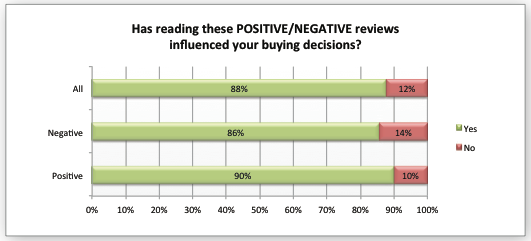
Quite a bit, it seems. Over 70% of customers look at product reviews before purchasing, and a survey sponsored by Zendesk found that 90% of participants were influenced in their buying decisions by positive reviews, which is huge. Take a look at the graph below:

reviews-influenced-buying-decisions

If your business can capitalize on positive customer testimonials and reviews, that will almost certainly influence the buying decisions of your customers. The primary reason is testimonials build trust. They show that your business is good at what it does and that your product does what you say it will. Testimonials also go a long way toward showing a history of good service, which is extremely important to most customers. They want to know that you’re not just a flash in the pan.

Testimonials should be authentic and not “salesy” so that they stand out as unbiased and genuine accounts of how happy your customers were with what you provided. Sincere and high-quality testimonials not only help to overcome the doubts of skeptics about your product, they even go a long way toward changing the minds of prospects who aren’t sure about the legitimacy of your product.

The reason for this is called “social proof,” which is also known as social influence. Social proof is essentially the power of the crowd. If a person is unsure of something (like a product or a business) but everyone else seems to love it, that person is more likely to give it a chance.

But there are specific rules that you need to follow if you are using testimonials or endorsements. The law says that they must be truthful and not misleading.

Let’s take a look.

1. Disclose Your Relationship with the Endorser

You must disclose any special relationships between you and your endorsers. For example, employees who promote your product must disclose that they are your employees, and business owners must create a policy that states this. Within your business, you should make sure you share this policy with employees, shareholders, and investors.

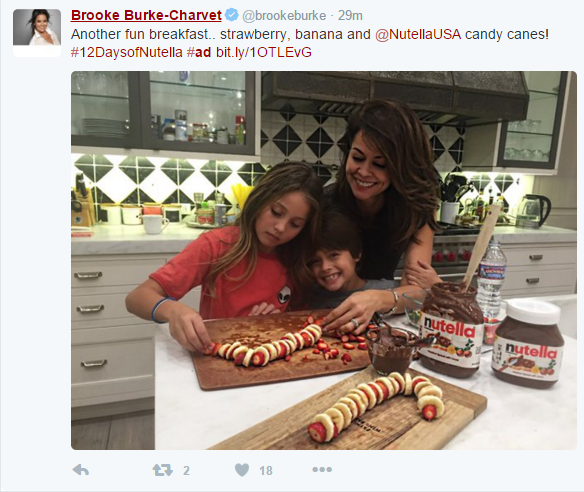
One way that endorsers can disclose their connections is to include tags or hashtags on social media promotions. For example, have a look at this tweet about Nutella from Brooke Burke-Charvet:

brooke-burke-facebook-ad

You can see that at the end of her tweet, she uses the #ad hashtag. This shows that she is promoting Nutella as an advertisement, and that she is being paid to promote it.

As another example, Amazon requires that all Amazon Associates (business owners and bloggers who earn referral fees by placing links to products for sale on Amazon.com on their own websites) must disclose that they are an Amazon affiliate and that they are paid when users purchase a product from their promotion.

You can be held liable for failing to disclose material connections with your endorsers.

All disclaimers and disclosures should be in clear, simple language so that viewers can’t miss or misunderstand your message. For example, use the #ad tag or a short statement like “This product was sent to us for review purposes” or “This review was funded by [Company].”

2. Ensure That Testimonials Are Accurate

You need to make sure all testimonials are accurate. One of the primary rules of the Federal Trade Commission (FTC) is that endorsements must reflect the honest opinions, findings, beliefs, or experiences of the endorser.

The FTC uses the following example to show how honesty about products should be conveyed:

“An advertisement for a weight-loss product features a formerly obese woman. She says in the ad, ‘Every day, I drank 2 WeightAway shakes, ate only raw vegetables, and exercised vigorously for six hours at the gym. By the end of six months, I had gone from 250 pounds to 140 pounds.’ … Because the endorser clearly describes the limited and truly exceptional circumstances under which she achieved her results, the ad is not likely to convey that consumers who weigh substantially less or use WeightAway under less extreme circumstances will lose 110 pounds in six months.

“If the advertisement simply said that the endorser lost 110 pounds in six months using WeightAway together with diet and exercise, however, this description would not adequately alert consumers to the truly remarkable circumstances leading to her weight loss.”

The other aspect of this (also illustrated by the above example from the FTC) is that endorsements must reflect typical experiences; and if the experience is not typical, it should be disclosed in an easy-to-spot disclaimer. Here’s an example of what this type of disclaimer would look like:

nutrisystem-ad

You can be held liable for false or unsubstantiated statements made through endorsements.

3. Get Written Permission from Your Customers

Be sure to keep a paper trail of any endorsement agreements or arrangements that you set up. If a customer agrees to endorse your product, get their agreement in writing (an email is sufficient).

This protects you in case a customer later wants to retract their testimonial. If they’ve agreed in writing that you can use their testimonial for a set period of time, you won’t have to remove their testimonial until the contract ends.

You can include clauses in your Terms of Service or Privacy Policy that any user reviews submitted to your website can be used for marketing purposes.

4. Don’t Lift Testimonials from Review Websites

If you see a good testimonial for your product on another site, don’t just copy and paste it onto your own website. Most review sites have a clause in their Terms of Service stating that user-generated content (such as reviews or testimonials) is owned by the user and licensed to the website.

This means that if you copy and paste the testimonial, you are infringing on the intellectual property rights of the person who wrote the review, which is not the best way to treat people who love your product!

Instead, you can use links on your website that go to these review sites, or you can use plug-ins that connect to crowdsourcing review websites like Yelp. If you want to have reviews easily available on your own site, use resources such as BazaarVoice.

Conclusion

Remember that you can be held liable for false or unsubstantiated statements made through endorsements and for failing to disclose material connections with your endorsers.

It’s not hard to follow the FTC’s guidelines. Simply ensure that all testimonials are honest and that they accurately represent the product. Also, ensure that you and your endorsers disclose all affiliations and any payments that are being made for the testimonial. By following these rules, you can benefit from the use of testimonials without being subjected to investigations or penalties from the FTC.

About the Author: Leah Hamilton is a qualified Solicitor and writer working at TermsFeed, where businesses can create legal agreements in minutes using the Generator.