Monday, 3 October 2016

Announcing the Updated Kissmetrics Funnel Report

The Kissmetrics Funnel Report is our most popular report, and for good reason.


Seeing where potential customers drop off and segmenting traffic to find the most valuable marketing channels are game changers for businesses.


And today we're announcing new features in our Funnel Report that will make it even more powerful.


Let's start with the new design.


1. More Flexible Design


Previously in the Funnel Report you'd create steps horizontally, like this:
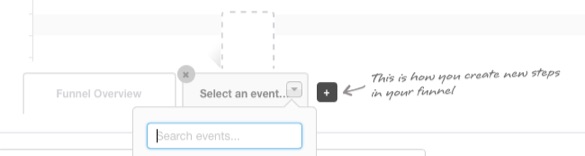

adding-steps-old-funnel-report


Now, to be consistent with the design of our People Search, we've changed the layout so you'll create steps vertically, like this:
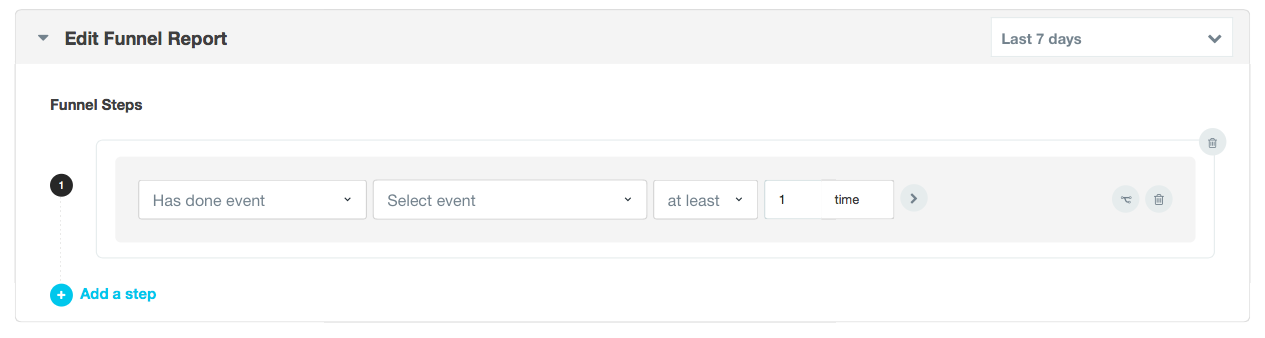

adding-steps-new-funnel-report


This new design flow allows for greater flexibility of some new features we've added (more on that later).


The visualization has also been updated. Instead of seeing something like this:
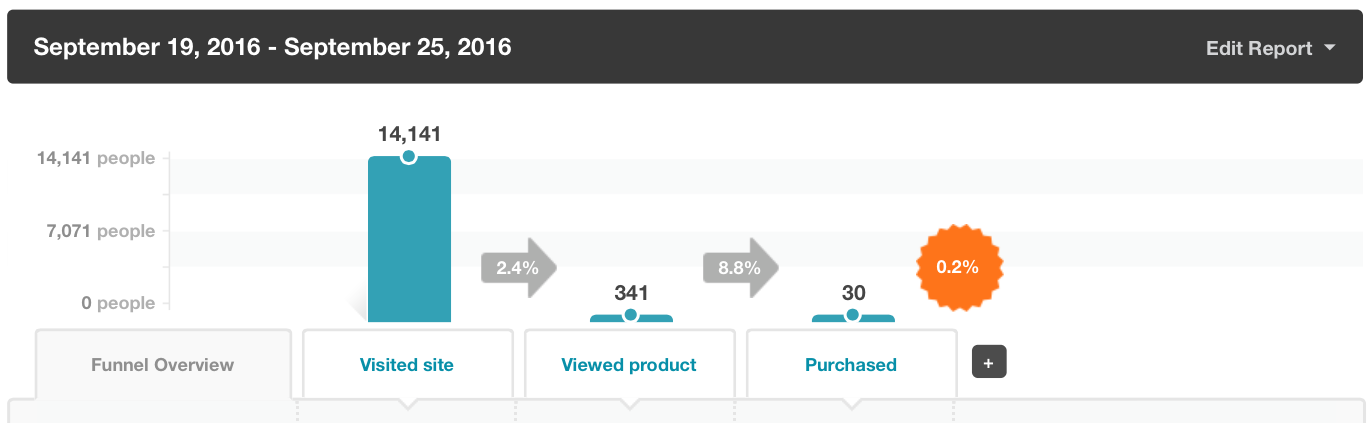

old-kissmetrics-funnel-report-design


You'll see this:


new-kissmetrics-funnel-report-design


Finally, many of our customers have four or more steps in their funnel. In our previous Funnel Report, there was no way to easily see a funnel with five or more steps.


Now it's as easy as scrolling side-to-side to view additional steps:


sliding-in-kissmetrics-funnel-report


2. Drag and Drop


Did you accidentally create your steps in the wrong order? With the drag and drop feature, you don't have to go back, delete steps, and then re-create them. You just drag and drop the steps into the correct order.
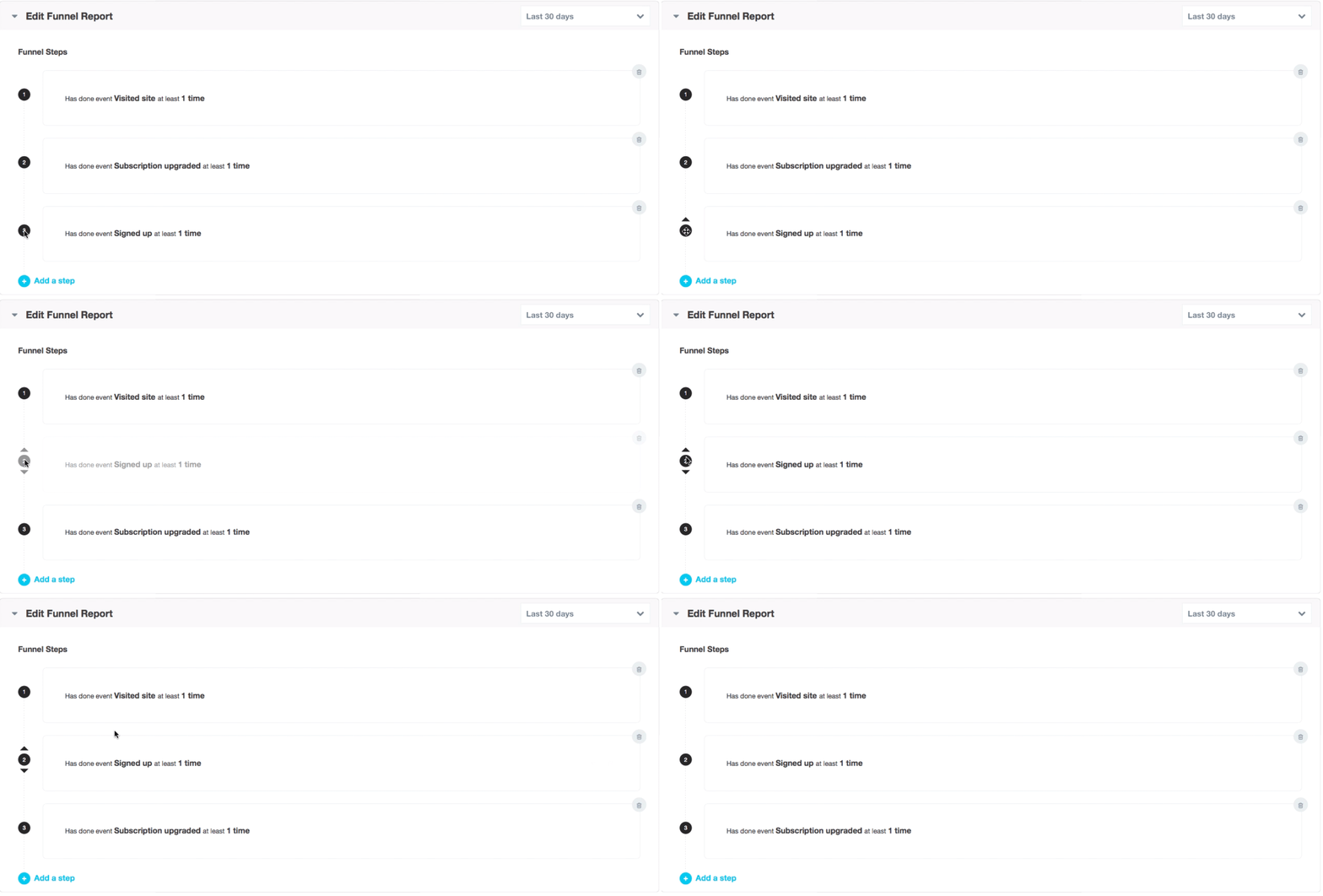

drag-and-drop-kissmetrics-funnel-report


3. And/Or Conditions


Let's say you're a marketer for a SaaS company. You have two ways for visitors to get in touch with your sales team. They can request a demo or sign up. You want to know which one is more effective at driving people to start paying for the product.


Now you'll be able to see people who have done both events or one or the other. So, in our case, we'll create a funnel report that looks for people who have visited the site and then signed up or requested a demo.


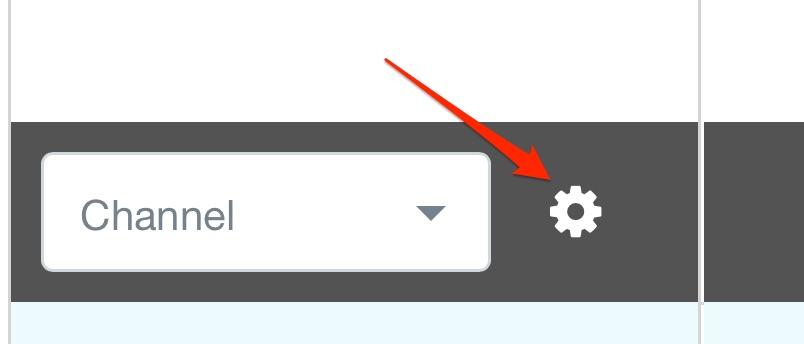
We'll create our first step, Visited site, and fill in the second event, Signed up. Then we'll add a condition by clicking on the button that the red arrow is pointing to:
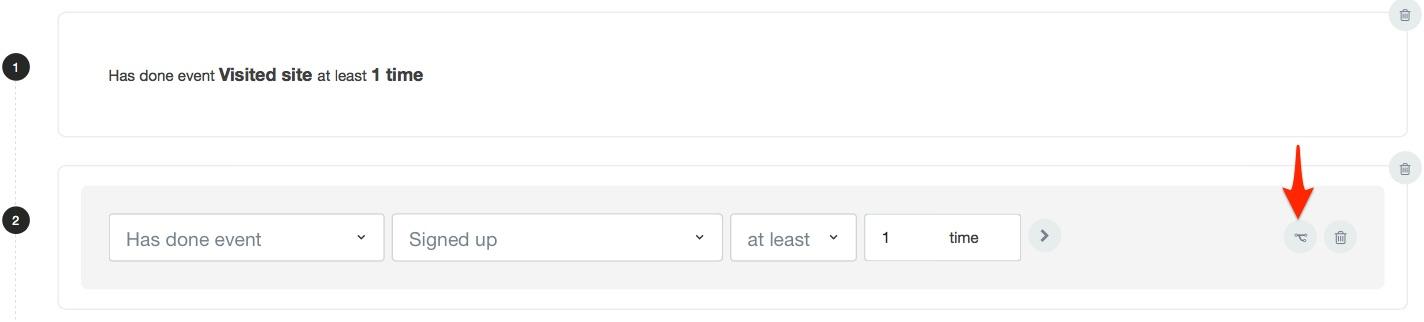

and-or-funnel-report


Click on that button and we'll get to choose and/or conditions.
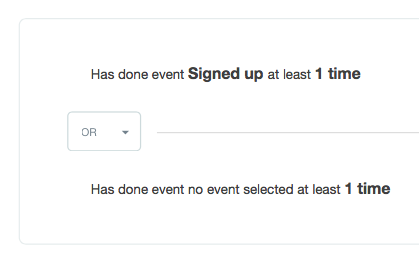

and-or-dropdown-kissmetrics


We'll keep it as or and add the event Requested demo. This will ensure that regardless of whether a person signs up or requests a demo, they'll be included in this funnel.
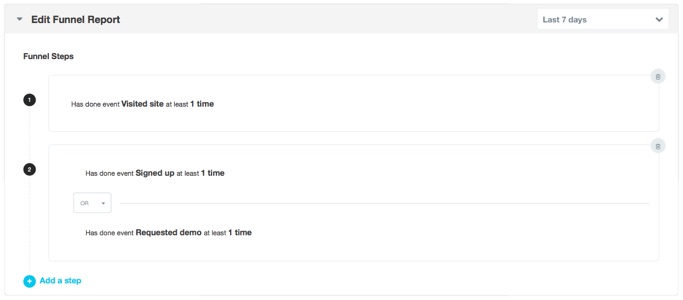

visited-site-signed-up-requested-demo-funnel


We'll run the report and get our data:
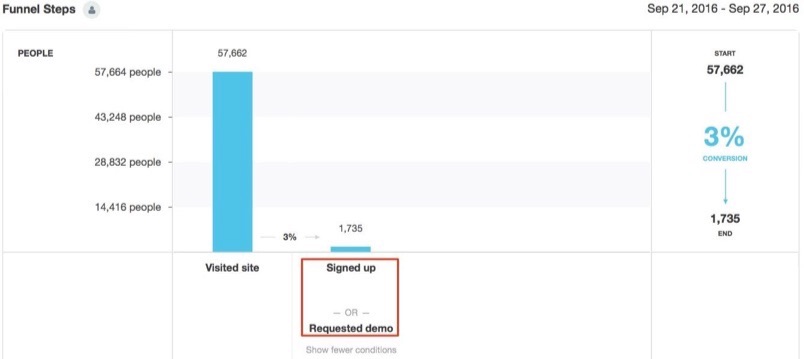

signed-up-or-requested-demo-funnel


You can see that Signed up and Requested demo account for a 3% conversion rate.


Want to see the individual numbers for each? No problem, just click on one of the two, and the Funnel Report will show you.
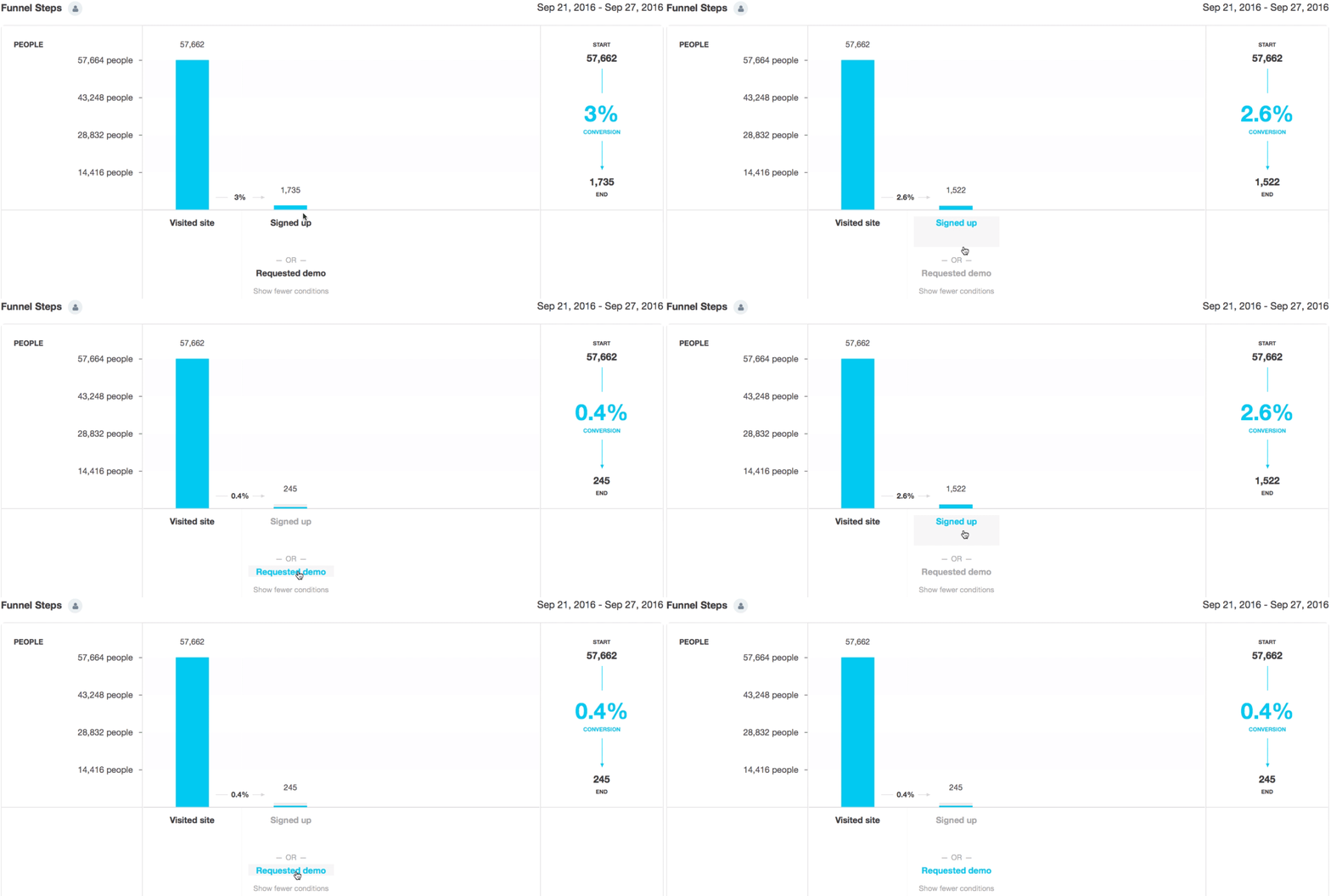

comparing-funnels-kissmetrics


We can see that we're getting a lot more signups than demo requests.


We can take this even further by adding additional steps to our funnel report to see how one condition may affect the funnel. Let's continue using this example to illustrate this important point.


If the next steps after Signed up or Requested demo are activating the product and then upgrading, we can see how each condition affects the funnel. Let's first look at how the funnel performs when people sign up:
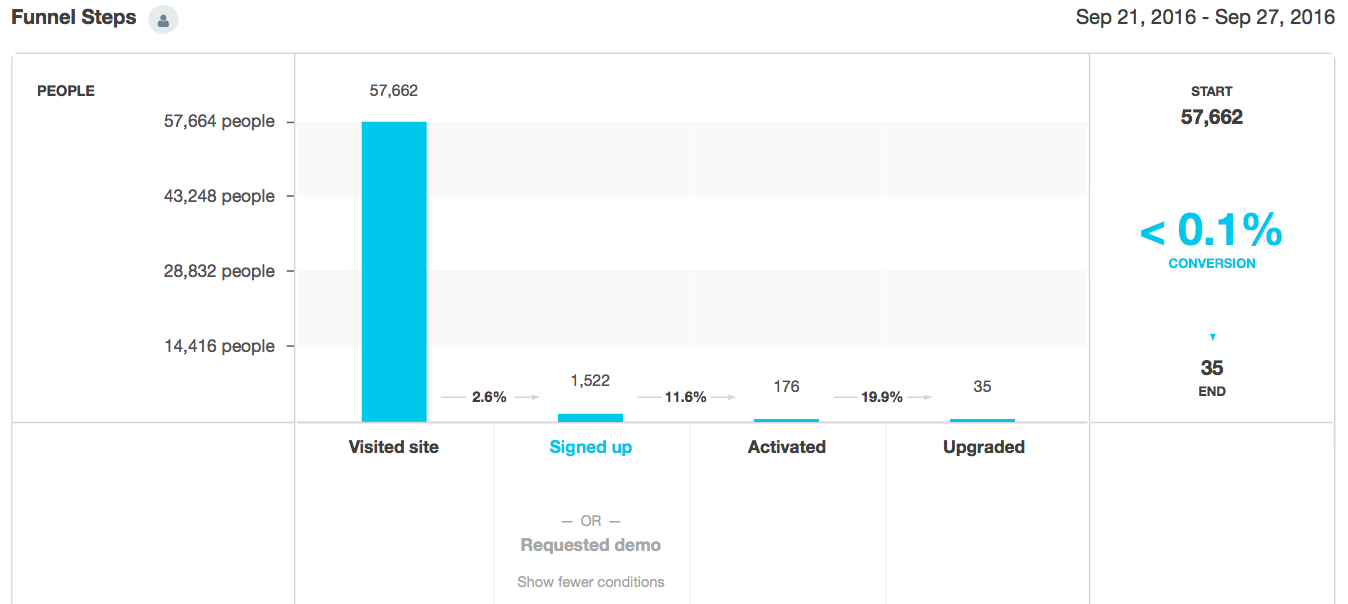

comparing-funnels-new-funnel-report


And now we'll compare that to demo requests:
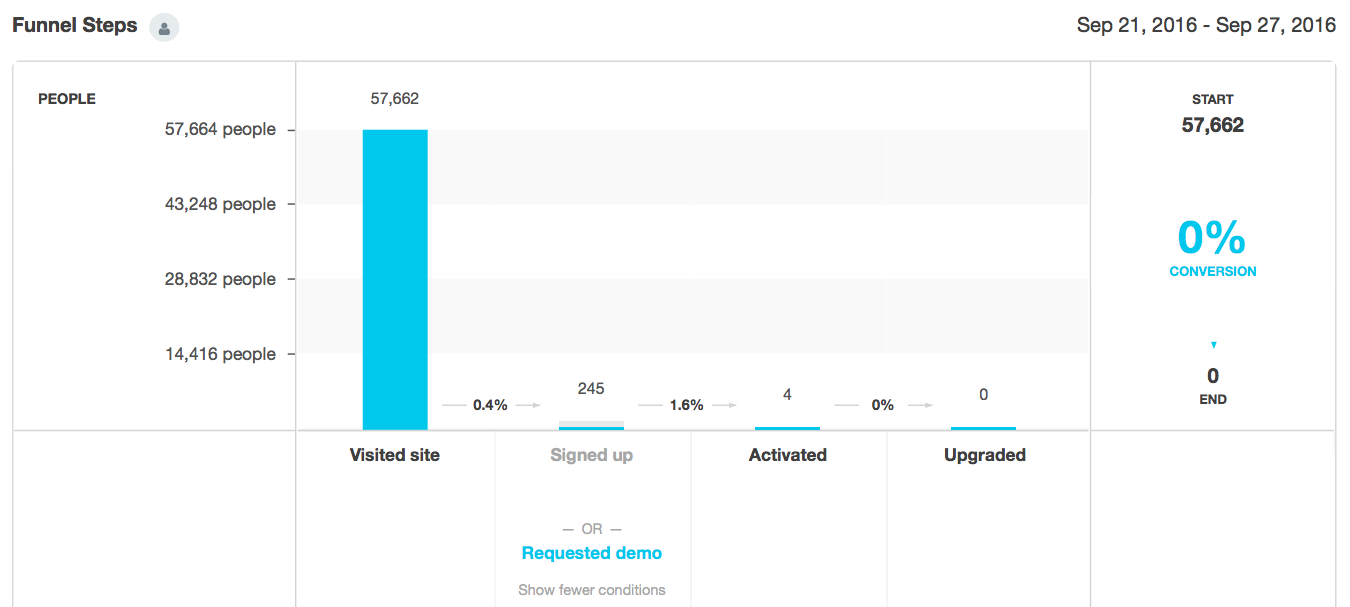

comparing-funnels-new-funnel-report-2


Big difference! We can see that while 245 people requested demos and 4 of those activated the product, 0 of them continued along in the funnel to paying for the product. All the success of the funnel is due to signups, not demo requests. As marketers, we now know we should focus more of our attention on driving signups and not demo requests.


Now let's do something similar with a property. We'll look at all the signups and demo requests that came from San Francisco. Here's how:


Click on the arrow sign next to the condition:


add-property-to-event


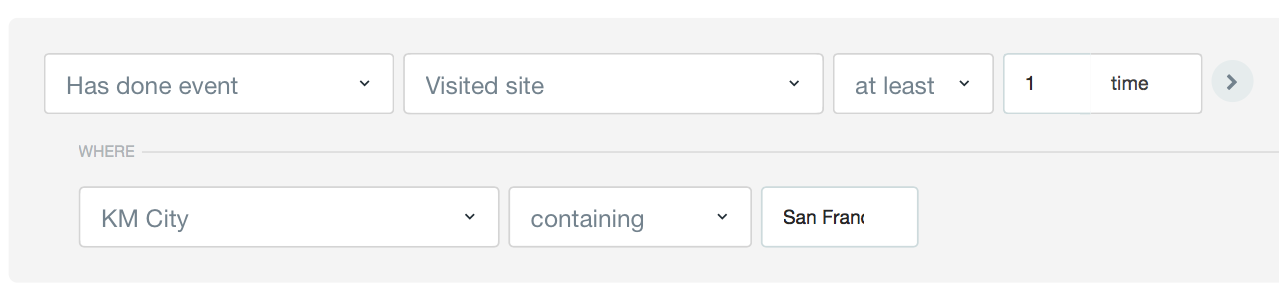
And we'll add the property “KM City” with San Francisco:

km-city-san-francisco


Visited site and KM City are automatically tracked in Kissmetrics. This means that we track it whenever someone visits your site, and we also look at what city they're coming from.


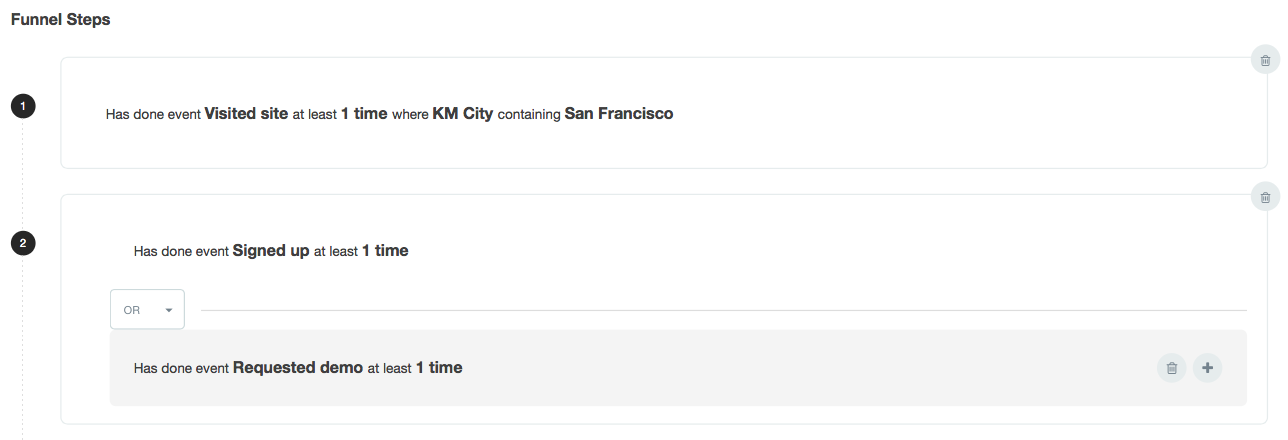
So this way we're telling Kissmetrics to find all the people who visited our site who came from San Francisco.


We'll then add the second step in our funnel – finding those people who either signed up or requested a demo:

km-city-funnel-signed-up


And run the report:


signed-up-demo-san-fran-funnel


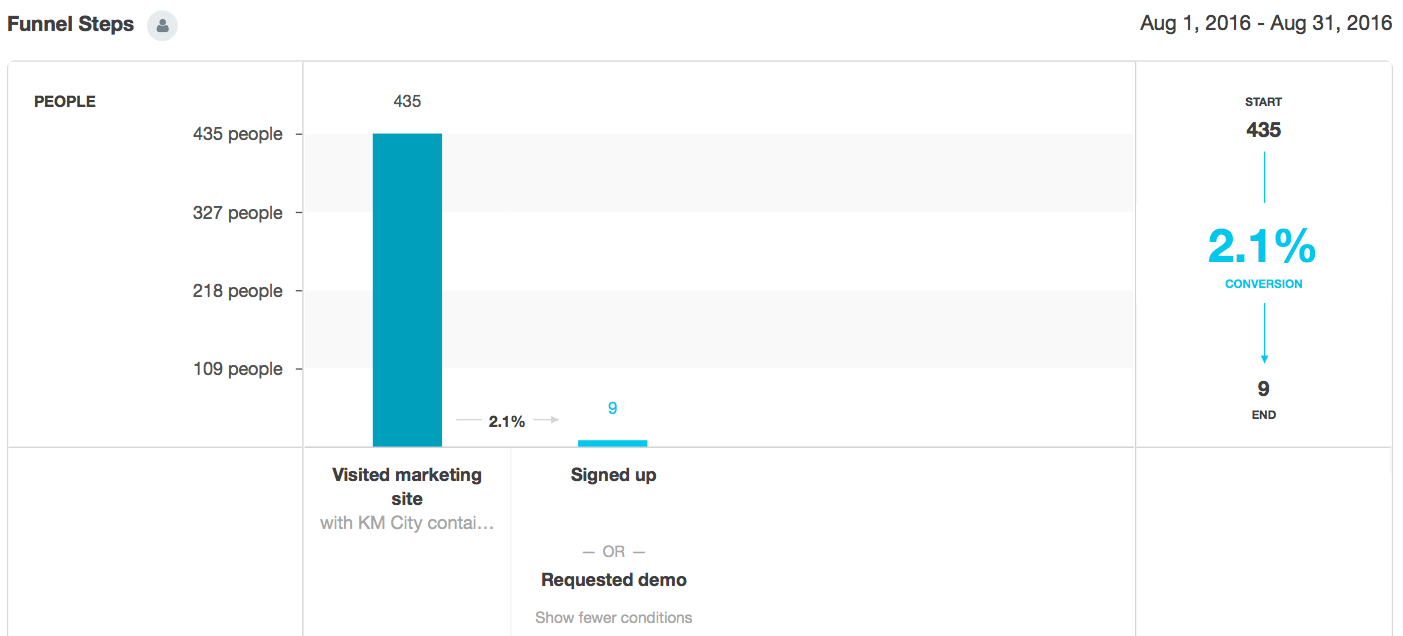
We can see that of the 435 people from San Francisco who visited our site during the selected date range, 9 of them converted to signing up or requesting a demo, giving us a 2.1% conversion rate.


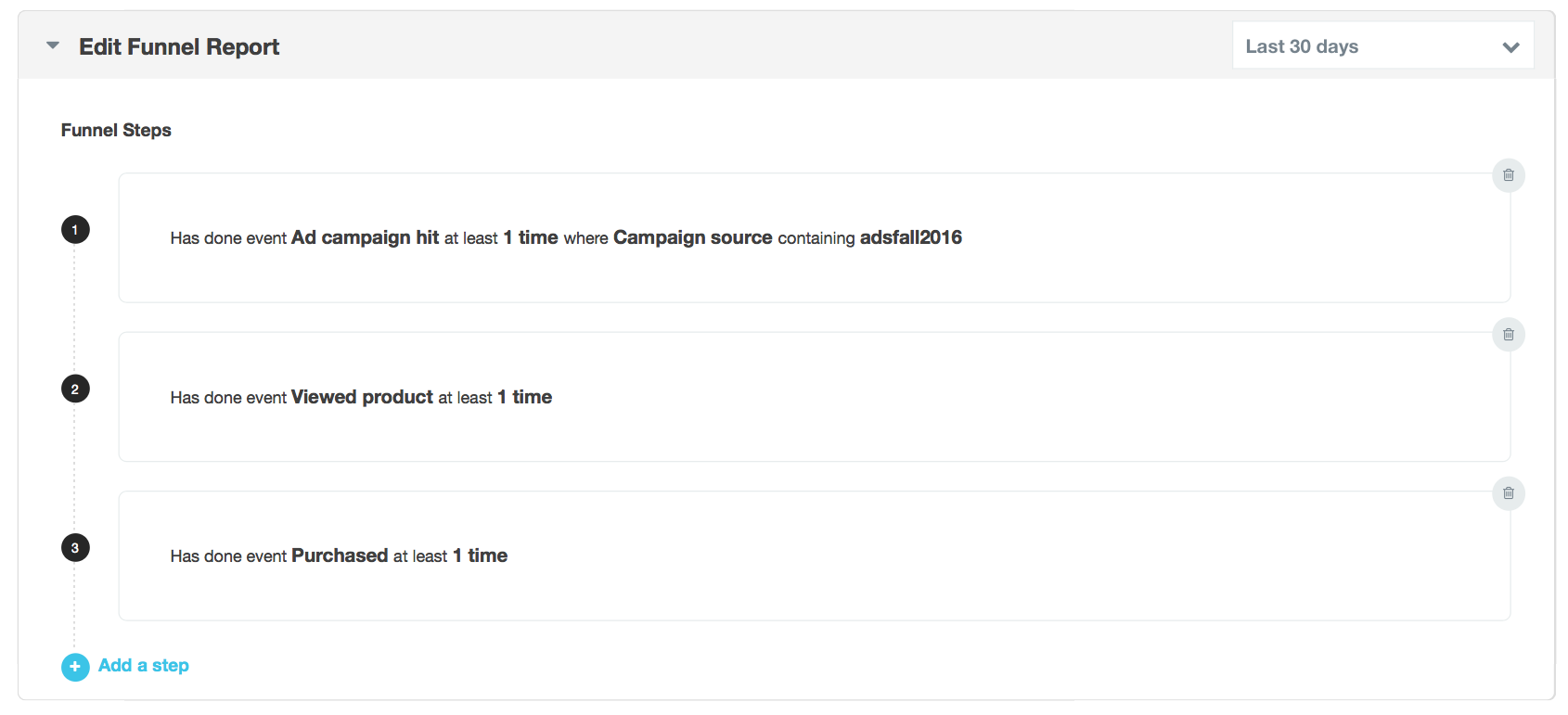
Let's use one more example. Let's say we just ran an ad campaign on 10 different sites. We are linking back to our site, and we tagged the URL with UTMs. We gave the “campaign source” as adsfall2016. Now we'll create a funnel report that looks only at people who came from a UTM with that campaign source.


ad-campaign-hit-funnel-report


You can see that the first step we have in this funnel is finding the people who have visited the site and whose campaign source was adsfall2016. We're also using the event Ad campaign hit, which triggers whenever someone comes from a URL with UTMs tagged. Ad campaign hit is automatically tracked in Kissmetrics along with any UTM parameters you have tagged.


We'll add two more steps – viewing a product and purchasing:

funnel-with-ad-campaign-hit


So now you can see how people progress through a funnel when they are coming from a campaign.


4. Numerical Values for Properties


We've added the ability to add numerical values to properties in the Funnel Report.


Got all that?


Here's what it gets you:


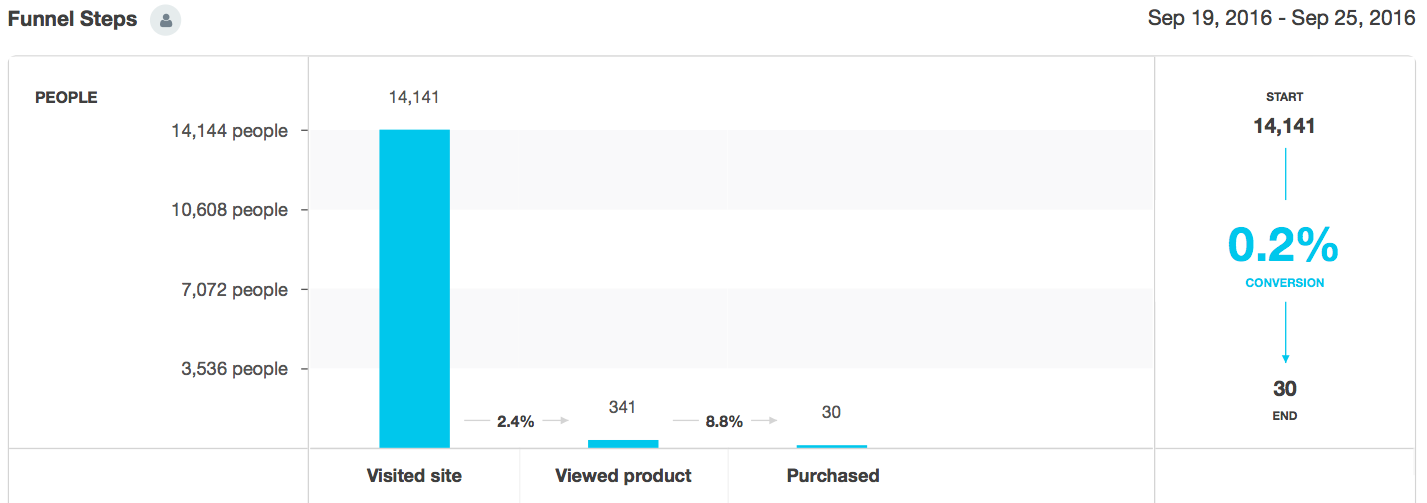
Say you're an e-commerce marketer and you just launched your fall campaign. You want to see the conversion rate for the people who have visited your site and made a purchase of at least $99.


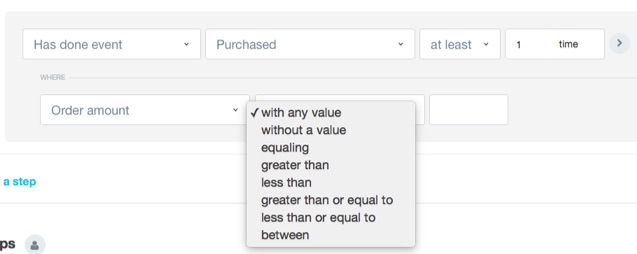
We'll add the property Order amount to the final step and tell Kissmetrics to find anyone who spent at least $99.

order-amount-with-any-value-kissmetrics


We'll select the “greater than or equal to” option and place 99 in the text box:


greater-than-or-equal-to-funnel


We'll run the report and get our data:
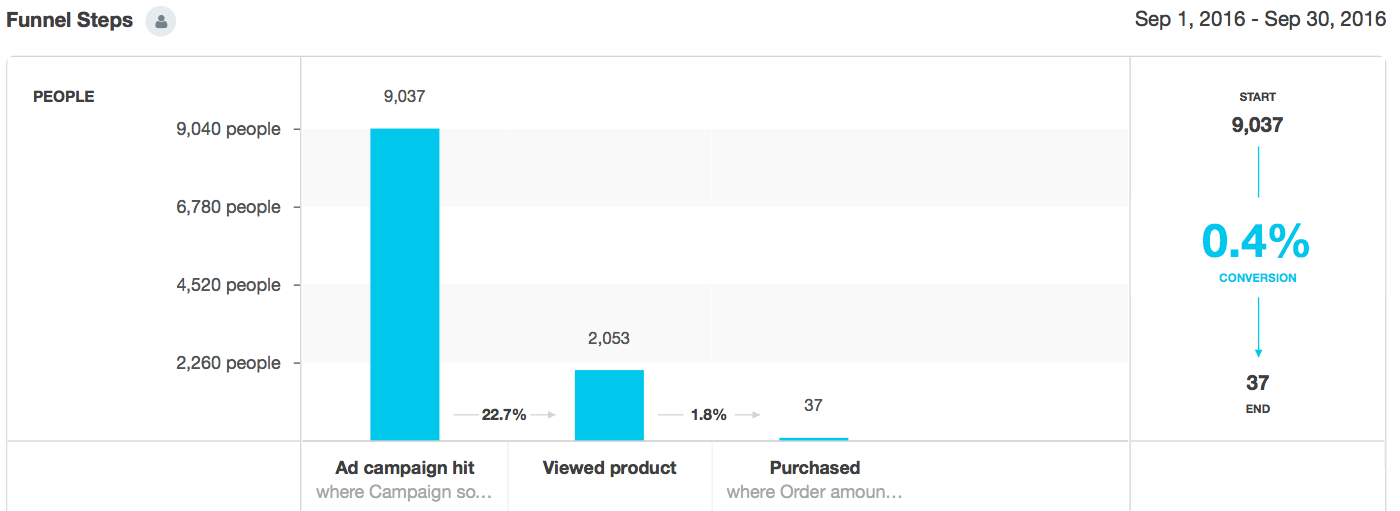

ad-campaign-purchased-funnel


This will make finding a specific customer segment even easier.


5. People Who Do Not Have Conditions


With our new Funnel Report, you can find people who have not done an event or do not have a property.


So if you want to find the people who have signed up but have not viewed a product video, you can do that with the Funnel Report. Or, for another example, you can see the people who purchased who did not use a coupon code.


Here's how to do that:


We'll create a funnel report that looks at people who have visited our site, have not viewed our product video, and signed up.


We'll create our first step, Visited site, and then select people who have not done an event. We'll choose Watched product video as the event.
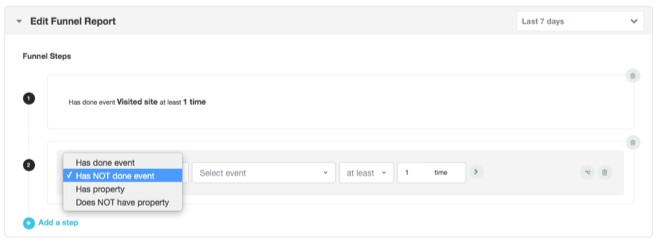

has-not-done-event-funnel


We'll add the final step, Signed up, and make our date range the last 30 days:
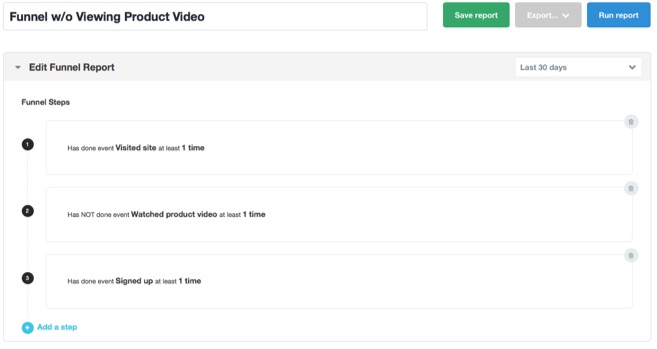

funnel-wo-viewing-product-video


Now let's get our data:


did-not-watch-video-funnel


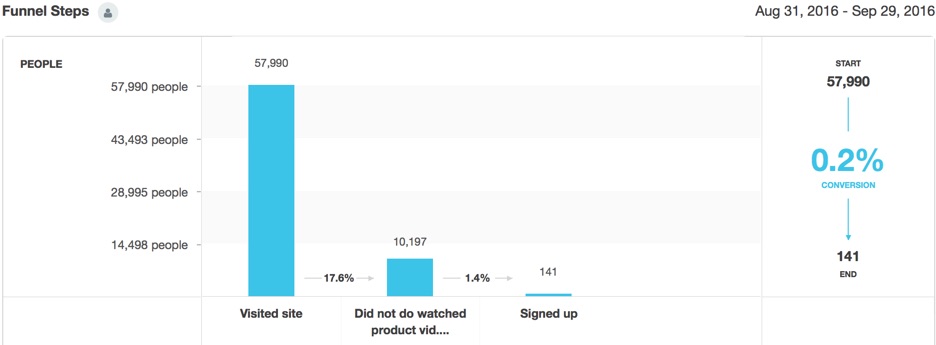
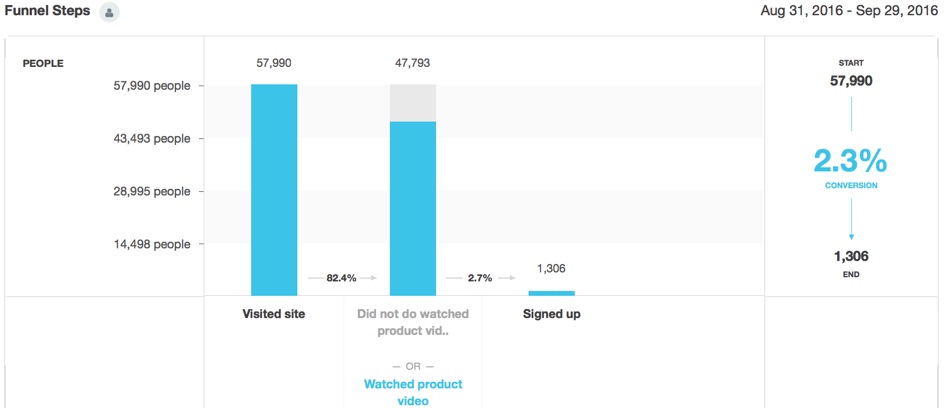
We see that a minority of people visiting our site do not view the product video before signing up. If we want to compare funnels by adding an or condition to our second step, we can do that too:
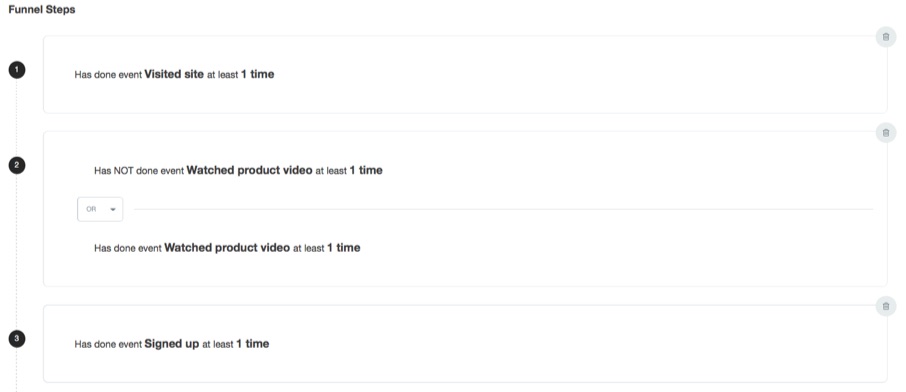

has-has-not-product-video


Now let's run the report and click on “Watched product video” to compare the funnels:

watched-product-video-compare-funnels


This shows us that most of the people who signed up had viewed the product video and that people who viewed the product video have a higher conversion rate (2.3% compared to .2%). If we want to improve our site and signups, we'll want to consider showcasing the product video more prominently as it seems to be an effective conversion driver.


Two Smaller Changes


Finally, we made two minor updates:


1. Design changes to advanced settings


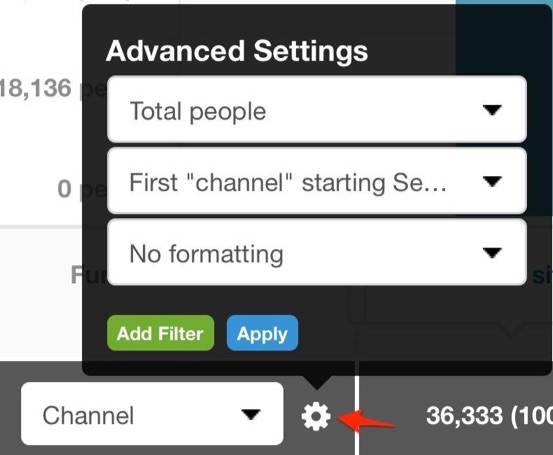
Previously you'd change your advanced settings here:

advanced-settings-old-funnel-report


Now you'll find those settings here:


advance-settings-new-funnel-report


Click on that gear icon, and you'll see the attribution, formatting, and conversion rate options:


advanced-settings-new-funnel-report


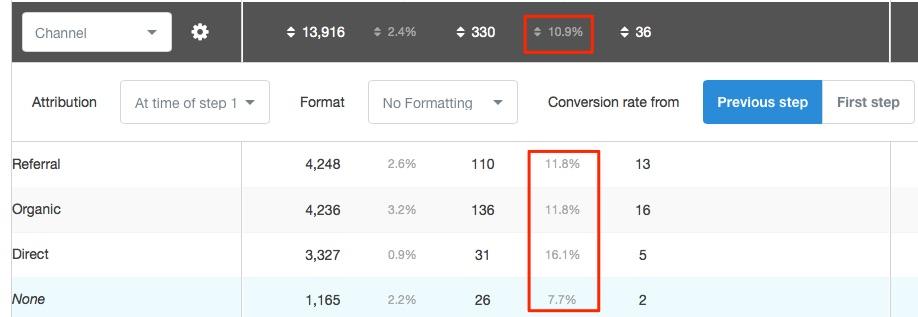
By default, the Funnel Report will display the conversion rate from the previous step. What's changed is that now you have the option to view the conversion rate from the first step. Here's where you'll find the conversion numbers:

previous-step-conversion-rate


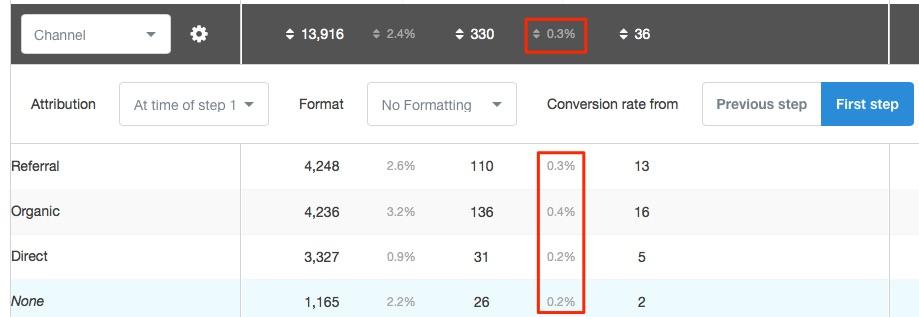
You can easily change the setting to see the conversion rate from the first step by clicking on the First step button:

first-step-conversion-rate


2. Checkbox changed to person icon


In some cases, people enter a funnel in a different order than the steps you have set up. For instance, you may have a funnel like this:


  1. Visited site

  2. Watched product video

  3. Signed up


But what if a customer viewed a product video after signing up? Their steps are:


  1. Visited site

  2. Signed up

  3. Watched product video


By default, the Funnel Report will exclude these people. But you can include them by checking this box:
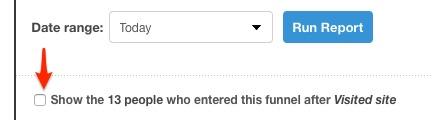

entered-funnel-checkbox


Now you'll find that feature here:


funnel-report-copy-change
We are changing the copy to better reflect the feature


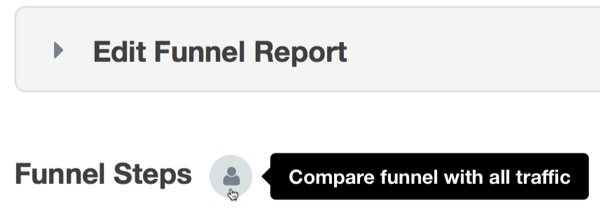
Click that icon and you'll be able to compare the funnel with all traffic. Here's how it looks:


funnel-with-all-traffic


Take the New Funnel Report for a Spin


If you're already using Kissmetrics, you can sign in to your account, and the new Funnel Report will be ready for you.


If you're not already using Kissmetrics, this is a great time to get started.


Is Your Small Business in a Marketing Rut? That Could Be Dangerous

By Andrew Raso


“Don't put all your eggs in one basket.” That saying has been passed around for decades. It's smart advice, but often goes unheeded in the business world.


Due to time and budget constraints it's not uncommon for small business owners to lock onto a single marketing tactic and run with it for as long as possible, especially when it seems to be working. But what would happen if your sole means of generating customers suddenly disappeared? Would your small business be able to adapt quickly?


I recall one small business owner I worked with who was reluctant to diversify his marketing. His retail business had been doing quite well and business was growing rapidly, thanks to local radio spots that he had purchased. He didn't feel the need to do more because radio was working, so he continued to put his budget into that.


Sometime later he reached out to me because the radio station had changed formats and ownership. With it, the rates for his ad spots during drive time had gone up, and he was forced to cut his daily advertising down to just a few ad spots a week. He found himself with a dramatic drop in business and was struggling to get by.


Diversify or Die


This story is all too common with small business owners. Most businesses can sustain themselves with a 10 or 20 percent in business. Everyone has lean times. But an over 50 percent decrease can spell the end. That's why it's important to diversify your marketing.


With diversity in marketing you:


  • Reach a broader audience, tapping into audience segments you would otherwise miss.

  • Have more channels to produce fresh content.

  • Create a more diverse and organic link profile which contributes to better search visibility.

  • Free yourself from cost fluctuations that otherwise trap marketers using single-channel marketing (as in my example above).

  • Are more prepared for changes in marketing, your industry, and consumer behaviors.


Diversity isn't about doing everything, though; it's smart deployment using marketing channels that most effectively help you communicate with and engage your audience.


Here's the approach I recommend for effectively diversifying your marketing:


Research your audience. Any decisions you make about the marketing channels you use, your messaging, the images, the timing–they're all based on your audience. You likely have a broad idea of who your customer is, and if you dig deeper you can create several targeted personas that represent real segments of your audience.


Understanding the demographics (who customers are) and psychographics (why they buy and behave the way they do) as well as their online behaviors you'll be able to see:


  • Where they spend their time online (which social channels).

  • What they like and dislike.

  • What content formats they prefer to interact with (video, text, images).

  • What their pain points are, and more.


This way you're not just picking a channel, like radio, because “everyone listens to radio.” You're basing your choice (blogging, video content, radio, community events, organic social or paid social ads) specifically on audience insights.


Examine the competition. Whenever I'm creating or refining a marketing strategy I always perform a SWOT analysis of my competitors:


  • Strengths

  • Weaknesses

  • Opportunities

  • Threats


A SWOT analysis will reveal opportunities for you to take what your competitors are doing and do it better. When you examine your competition, you'll also see how they engage your audience. What channels are they using? How effective is their outreach and do you see ways to do it better?


Choose your channels. Again, you don't have to do everything all at once. There are over 100 commonly used marketing channels you can use to engage your audience. Start by focusing on three, based on your research, that would be the most effective for engaging your audience.


The most common channels that will likely be at the top of your list are:


  • Social media (organic engagement) on sites like Facebook, Instagram, and Twitter

  • Secondary social sites for video content like Snapchat and Periscope

  • Blogging

  • Email marketing

  • Video content posted to sites like YouTube and Vimeo

  • Paid social (Facebook ads, Instagram ads)

  • Community engagement (local events, social media groups, community sites like Reddit)


Don't just focus on this list, though. Go by what your research tells you.


Set goals and milestones. Don't jump immediately to promoting and content publishing on any channel you select until you've established your goals. You need to know what it is that you want from your efforts.

Create your overarching goals and define your key performance indicators (KPIs); these will help you define what success looks like. Break down goals into milestones to create a road map you can follow to your primary goal.


For example, if your goal is to increase your engagement on Facebook, a key performance indicator might be a certain percent gain in reach and engagement each week. Small goals to help reach the larger might be setting a number for daily number of posts–achieving that number, and responding to every comment.


Test everything. Even if your research says a certain marketing channel is ideal, you still want to test and measure everything you do. Track important metrics like customer conversions, traffic generated from certain channels, in-store purchases traced back to custom coupon codes online, etc.


Measuring your results is the only way to know how effective your efforts are. From your metrics you'll be able to determine if it's worth changing up the strategy on a certain channel to improve it, or dumping it if it's not working.


Revisit your strategy. You'll likely see success with your initial efforts, which is fantastic. I urge you to continue to revise your strategy, however. Once you have one or more successful marketing channels you should continue to build on them.


Conduct new research, improve your current channels, and add new marketing channels to further diversify your efforts. Like a small tree, your marketing and content strategy will eventually grow with a lot of branching channels, each contributing to a consistent influx of new and returning customers.


About the Author


Post by: Andrew Raso


Andrew Raso is the co-founder and director of the Online Marketing Gurus, a fast-growing, award-winning search company that works with some of the world's leading brands, including Coca-Cola, Salesforce and FreshBooks. Follow him on Twitter @marketinggurus3.


Company: Online Marketing Gurus

Website: www.onlinemarketinggurus.com.au

Connect with me on Facebook, Twitter, and LinkedIn.


The post Is Your Small Business in a Marketing Rut? That Could Be Dangerous appeared first on AllBusiness.com

The post Is Your Small Business in a Marketing Rut? That Could Be Dangerous appeared first on AllBusiness.com. Click for more information about Guest Post.


Sunday, 2 October 2016

How to Run an Efficient Marketing Campaign on a Shoestring Budget

Anyone in marketing knows that the best marketing strategies revolve around efficiency. On bigger scales, investing more money can oftentimes lead to better results, but if you aren't spending that money effectively, the size of your budget won't matter-your return on investment (ROI) will still pale in comparison to what it could be.


One of the biggest mental hurdles for startup entrepreneurs to overcome is the challenge of working with a small budget in early-stage marketing campaigns. Most startups struggle with limited initial capital and almost no working revenue, so those in charge of such campaigns believe it's next to impossible to see meaningful results.


Fortunately, that's not the case; instead, you need to find ways to market your business more efficiently, using the resources you already have.


Be Choosy With Your Strategies


Your first step is to be choosy with your strategies; just because it sounds good or it “seems” like the type of strategy that should work doesn't mean you should add it to your repertoire. Because your budget is limited, you're only going to be able to work on a handful of strategies-the ones you add should be your most likely contenders to succeed.


Do your research and select strategies that have a wide range of impact, like blogging, which as Neil Patel suggests, will serve, not only as the central basis for your web strategy, but can build traffic in a number of other separate channels. You can also select strategies that hold a high ROI for your industry or key demographics.


Start Small


Next, you'll want to start small. Once you've decided on a marketing strategy, it's tempting to go full-force into it; after all, the sooner you start to build a presence, the sooner you'll start reaping the benefits of a larger audience. However, if you invest too much in the wrong direction-like if your chosen strategy doesn't pan out how you envision it or if you decide to adjust your branding halfway through-you could be eating a major loss. Invest in strategies slowly and gradually at first, relying on AB tests when you can to directly compare your results against each other.


Trim the Fat


After a few weeks to a few months of running your separate (but related) campaigns, take a scrutinizing look at the types of results you're seeing. Where are you seeing the highest ROI? Where are you underperforming? Your main goal here is to trim the fat, ceasing investments into strategies where you aren't seeing a positive return, or at least a promising early start.


Again, there's only so much room in your budget here, so if you have three strategies that return 50 percent, 30 percent, and 25 percent on your investments, it's better to ditch the latter two and focus everything on your moneymaker-even though the other two are still positive.


DIY When You Can


Though professional marketing and advertising agencies can help you see bigger, better, more consistent results, you may not have the budget for them-at least not right away. And as Hubspot points out, there really is nothing wrong with DIY marketing as long as you take it seriously. Spend some time researching best practices for any and all marketing strategies you intend to use, and don't assume you know what's best because it intuitively “feels” that way. Back up all your assumptions with hard data whenever possible, and always challenge yourself to learn more. It's a major investment of time, but with such a small budget, it's your best option.


Opt for Freelancers


Instead of doing all the work yourself or relying on your internal staff to handle things, you could opt for freelancers; this is a way of finding outside authorities and experts without resorting to expensive agencies or consultants. The difficulty here is finding a freelancer with expertise in your area of need who's reliable enough to bring on consistently and affordable enough to work within the confines of your budget. It won't be easy, but if the hunt is successful, you'll get practically everything you need without going over budget.


Don't Skimp on the Important Areas


There's one more important consideration here: while it's prudent and sometimes necessary to rein in your marketing spending to accommodate your startup's budget, you must also realize some areas of marketing can't be skimped on. For example, if you hastily throw your brand together without investing in real market research or professional design, your company's entire reputation could be compromised. If your website is clunky and barely functional, it doesn't matter how many people you can forward to it, it's going to make a bad impression. Prioritize the fundamentals, and find ways to cut costs in other areas.


The post How to Run an Efficient Marketing Campaign on a Shoestring Budget appeared first on AllBusiness.com

The post How to Run an Efficient Marketing Campaign on a Shoestring Budget appeared first on AllBusiness.com. Click for more information about Larry Alton.