Tuesday, 26 July 2016

4 Things Hurting Your Credit Score (And Why You Need to Know This)

The twenty-sixth mile. Perfect sprinkles on a birthday cupcake. A walk down the red carpet to collect an Oscar. The peak of Mount Everest. A perfect credit score.


Of all the things the universal “we” aspire to, a perfect credit score ranks right up there. And as with other aspirations, people hire coaches and experts to help them get there. But like too much exercise or overdoing it on sweets, can you also be inadvertently hurting your credit score?


The answer is yes. Here are four things that can hurt your credit without you even knowing it. Keep your financial health at its peak by avoiding these common credit mistakes, and get closer to that perfect credit score.


1. Taking your eye off the ball. With the hundreds of tasks to do and decisions a small business owner has to make in a day, adding anything that seems optional can quickly slip down the list. This is why many business owners only check their credit when they need to take out a loan. However, watching your credit on a regular basis can actually save you time, and taking your eye off the ball is a dangerous proposition in any game.


You can easily automate this function by setting up alerts through free business credit monitoring tools. These tools will monitor things for you and ping you when there are changes. Credit scores typically stay pretty constant, so getting pinged the moment something like a significant drop occurs can alert you to something serious like identity theft right away. Having access to this information instantly is much better than finding out months afterward, when the damage has been done and it is more difficult to recover.


2. Assuming accuracy. Business credit report errors happen more often than you might imagine. A Wall Street Journal survey showed that 25 percent of small business owners who viewed their reports found credit damaging errors.


Mistakes such as outdated revenue figures or an incorrect industry classification code (SIC)–which are easy to correct–can damage your credit. For example, being coded as a “real-estate investment” company carries a higher credit risk, so an inaccurate label matters. These kinds of errors could be damaging to your business credit scores without you even knowing it.


Mismatched business profiles are another common problem, and it's not hard to understand how this happens. Unlike consumer credit reports, which require four pieces of very unique data like your social security number and date of birth, your business credit report only uses your business name and address–and the bureaus don't require that the data be exact. This makes business credit reports rife for mistakes. For example, if your DBA is close or the same as another, this can cause an easy mix-up.


Take 30 minutes to review your reports from the three main business credit bureaus (Dun & Bradstreet, Experian, and Equifax) to ensure that your information is correct. This half-hour investment on a regular basis can save you big headaches later.


3. Paying your bills on 'island time.' “Island time” is a great concept when you're on vacation; however, when it comes to business credit, paying bills even a little late can cause a bigger problem than you might think.


Business credit works differently than personal credit. With personal credit, you get 30 days to pay your bills before they're considered late and ding your credit score. With business credit, paying even one day late is considered “late” and can result in a drop in your credit score.


Let's say that your coffee and doughnut vendor offers you net 15 terms, giving you 15 days to make your payment for the caffeine and sweets they delivered last week. If you pay-or they receive your payment-on day 16, they can report you for paying beyond terms, which will hurt your score.


Dun & Bradstreet's Paydex score ranges from 0 to 100, and is based solely on your payment history. This is the primary score used by vendors to determine the creditworthiness of your business; the higher the score, the better for you.


If you pay all your business bills exactly on the date they are due, you would earn a Paydex of 80. To get an even higher score, you'd have to pay in full before the due date.


4. Relying solely on personal credit. It's next to impossible to grow a business on personal credit alone. Yet for many entrepreneurs starting out, leveraging personal funds and credit cards is a common first step.


Unfortunately, this strategy can lead to overreliance and maxing out personal credit cards which can hurt your personal credit. In addition, it does nothing to nurture your business credit for the future. Having an anemic business credit file can be just as harmful as having poor credit.


Even though you may not qualify for a big credit line at first, it's important to open a business credit card when you're just starting out. This will help you build business credit, which will let you secure more capital over time. On average, a company uses credit at 10 times the rate of a consumer, and can usually access 10 to 100 times more credit. At some point, you may need this capacity, so it's a good idea to start as soon as possible.


Play the business credit game like a champion, and don't fall for rookie credit mistakes. Working to avoid these common pitfalls, rather than ignoring them and having to fix your broken credit after the fact, will save you a great deal of time and effort in the long run by ensuring your business credit score is always in peak condition.


The post 4 Things Hurting Your Credit Score (And Why You Need to Know This) appeared first on AllBusiness.com

The post 4 Things Hurting Your Credit Score (And Why You Need to Know This) appeared first on AllBusiness.com. Click for more information about Meredith Wood.


Monday, 25 July 2016

Is Fear of Failure Holding Back Your Business? Snap Out of It!

Making that first entrepreneurial move and starting a business is one thing, but where do you go from there? So many people start a business, and it's ticking along…but that's it. They don't seem to go any further–perhaps due to fear of failure–or simply do not know how to take it further.


Don't you wish your one-man band could become something much bigger? Don't you have the drive to push your microbusiness towards bigger and better things? risk in business, business growth, fear of failureMany small business owners dream of more for their businesses but do nothing about it, and this is often because of an innate fear of risk.


The current economic climate and the fallout of Brexit has left many small business owners feeling scared when, in reality, they should be taking advantage of everything that the current situation has brought them. There is no perfect time to make that next business move, and using the economy as an excuse or a lack of budget or anything at all will just result in their businesses stagnating and many missed opportunities.


It is easy to give up, blame the wider economic situation and anyone else but yourself for lack of growth in your business. But, in reality, the only person who can make a change and grow your business is you. Create your own universe, adapt, and grow.


Mind-Set is Everything


To succeed in business, you need to be set up to do so. There is no such thing as just “getting lucky.” However, as much as you might think that all those billionaire entrepreneurs got where they are today by simple luck, it genuinely is not the case. You are the only person who can make your business succeed, and it is up to you to push your business forward and make sure people know about it, because no one is just going to come to you.


Anyone can have an idea and become an entrepreneur if they work for it. From creating a unique app to turning an original vision into a successful and popular product which generates thousands of hits a month, there are many different ways to go into business.


However when you start a business, it's up to you to be committed to your goals, create fantastic propositions, and most importantly, make sure you get noticed. So many small businesses wonder why they aren't achieving worldwide fame, and when it comes down to it, they are not working to get themselves known.


Embrace Risk for Real Success


For some business people risk is like the bogeyman. However, the idea of doing something that could potentially damage their business when there is another option to stay “safe” is unthinkable for other some business people. Fear of failure is not going to grow your business. risk in business, business growth, fear of failure, business riskPlaying it safe is not entrepreneurial; playing it safe does not accelerate business growth.


To have an edge over others in your market and be a true pioneer, you need to consider risk as your partner and not the enemy; fear of failure cannot come into the equation. Risk comes hand-in-hand with opportunity, and almost no opportunities will come your way in business without at least some degree of risk. With the right mind-set and having a level head that's ready to accept that not every business idea may be a success, you are positioned perfectly to take business risks, and grow and learn from them.


For some, the idea of risk is tied into a genuine fear of failure, but surely isn't it worse to not even try? Stepping outside of the comfortable zone you have built around your business is key to taking it to the next level. Remaining a small one-person business may be something you've convinced yourself is fine, but, in reality, who doesn't want more for themselves?


Alongside embracing risk comes finding and accepting your business rituals and superstitions. Many of the world's most famous and successful entrepreneurs are highly superstitious, and being superstitious actually helps them focus on pushing their businesses more successfully. Japanese inventor Yoshiro Nakamatsu believes too much oxygen is bad for the brain and is said to submerge himself in water until the very last second to come up with each of his original inventions.


Similarly, although a little less out there, Mark Zuckerberg claims to have worn the same T-shirt every day to avoid wasting time on deciding what to wear. This kind of attitude shows true entrepreneurial spirit: the focus is wholly on business and not less essential daily necessities. (Although it is definitely worth washing and maintaining personal hygiene to help freshen you up!)


What is Stopping your Business from Growing?


Why are you still at the startup stage three years in? Businesses can drag their heels for five years or more, still fitting the startup mold when they should be much further advanced. Why is this the case? So many entrepreneurs seem to be paralysed by fear of failure and limited by an avoidance of risk, but your business growth might also be halted due to:


It was flawed from the start. If there have been issues with your business plan from day one or with your expectations, then it may be hard for your business to grow in the way you had hoped. Maybe your original business plan needs to be dumped, and you need to start again and reassess where your business is going and where you'd actually like it to go.


Lack of legwork. Are you actually doing enough to see your business succeed? Many CEOs dream of the day they can kick back and relax whilst their businesses run themselves. But this isn't something that comes easily, and most successful entrepreneurs thrive on working hard everyday of their lives. Are you only looking for the easy life? Maybe you need to look elsewhere.


Sloppy sales strategy. If you have a great product or service, that's one thing, but how are you marketing it? How do you expect it to sell? Any entrepreneur who is serious about growing their business while generating leads must focus on effective sales strategies such as good landing pages and investing in advertising.


You're winging it. There is a belief amongst some entrepreneurs that you can simply “wing it”' and everything will come together. Entrepreneurs often launch startups in a blaze of activity and forget some of the finer necessities to deliver success. Expecting everything to “work itself out” is not an effective business strategy, and you will not see the growth you desire.


Fight the Fear of Failure for Future Success


There will always be difficult decisions to make in business, whatever stage you're at, and attempting to avoid making these decisions will either see your business flatline or completely fail. There is no bad decision other than no decision.


Fear of failure is a mind-set. No one wants to be in charge of a sinking ship, so you have to be upbeat, ready to tackle challenges head on, and more than anything else, prepared to take the risks necessary to move your business forward. Sitting back and waiting for success to come your way simply won't deliver results.


Good fortune to you, and thanks for reading. I hope I have assisted you with your mind-set and approach to business and life.


The post Is Fear of Failure Holding Back Your Business? Snap Out of It! appeared first on AllBusiness.com

The post Is Fear of Failure Holding Back Your Business? Snap Out of It! appeared first on AllBusiness.com. Click for more information about Lyndon Wood.


What the 1960s Can Teach You About Growth Hacking

Growth hacking is an evolution.


Not a revolution.


It takes a different skill set. A new way of thinking.


However, at the end of the day, a lot of what you're doing still looks and sounds like real marketing.


Not today's misappropriated use of the word, but the good stuff originally developed back in 1960s.


Here's why.


Where Did Growth Hacking Come From?


Sean Ellis gets credit for initially coining the term that would eventually send startup peeps into a frenzy. (And for the first time in their lives, not completely abhor the concept of marketing or sales.)


Sean's concept came from initial failed attempts to hire data-driven, technical people focused on growing products or companies.


Instead, most of the 'marketing backgrounds' he saw made them great at communication, PR, and other classically defined marketing skills. Yet little focused on this new way of obsessing over conversions first.


These skill sets, while important, also aren't completely necessary in very early stage startup companies, as QuickSprout excellently points out in the Definitive Guide to Growth Hacking. They also carefully point out that both skill sets are still very important – one's just right for different circumstances.


But the problem comes when it's asserted that growth hackers are fundamentally different than marketers. Even the sage Fred Wilson got this wrong.


Are the two things so interlinked really all that different?


I'm not so sure.


Here's why, and where the confusion stems from.


The Great 'Growth Hacking' Hoax: Why Marketing Isn't Advertising


It's not growth hacking's fault.


For years, 'marketing' has been masquerading as 'advertising'. Inside most companies, the 'marketing department' does little more than work with advertising agencies or pick advertising channels.


Only in a rare case are they responsible for actual, you know, marketing.


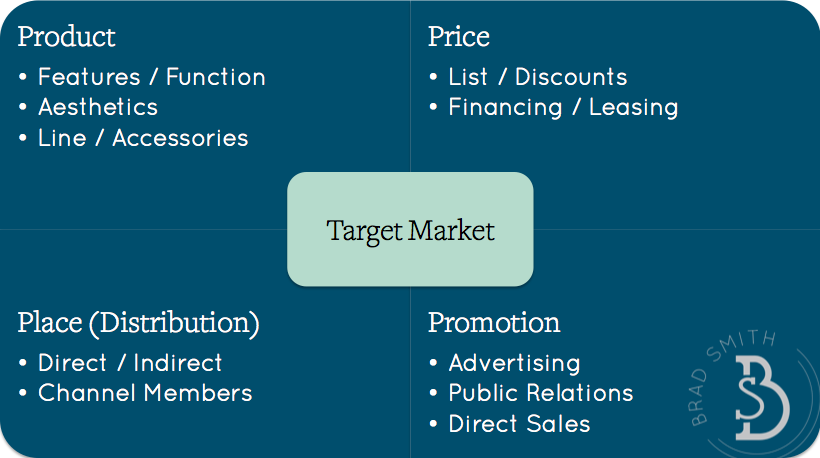
Years ago, like way back in the 60s, the marketing mix was developed to provide a framework of all the roles and responsibilities that marketing influences.


And what you'll quickly notice, is that unlike today's bastardized version of marketing, this one actually includes a few other key areas like Product, Pricing, and… wait for it… Distribution (we'll come back to this last one in a minute).

product-price-place-promotion-target-market


Now is the marketing mix the end-all-be-all? Of course not. Sure, there's flaws.


But the central idea is strong and valid. And it can be perfectly highlighted with a simple story.


Walk into any car rental agency right now. Or retail. Or food. Movie theater. Take your pick.


What you'll encounter, is numerous dealings with the lowest paid, most underappreciated people in a company. And they'll treat you as such. Your experience with each person (who undoubtedly hates their job and questions their existence) colors your worldview of that brand forever.


What do you call that? Who's responsible for putting these ingrates in direct contact with customers on a daily basis? Customer service? Operations?


Now walk into an Apple store or a Four Seasons, and you'll undoubtedly #humblebrag to your friends on Instagram how helpful and awesome they were.


That's marketing. Even Fred Wilson readily admitted that customer service is one of the best forms of marketing for startups. And under the classic definition, it is.


The long-winded point here is that true marketing isn't advertising. Or PR. Or sales. It's all this junk that ultimately gets a customer to buy your stuff.


Or 'convert' and become a 'user'.


Peter Drucker, the OG, said the “aim of marketing was to make selling superfluous”. Obviously that's not defined or limited to a single person or department within an organization. And that's where the confusion stems from.


Growth hacking definitely has some unique characteristics that make their objective different than say, these other brand marketers who obsess over fuzzy intangibles all day.


But at the end of the day, a lot of what they do still looks like classic marketing.


Let's get specific.


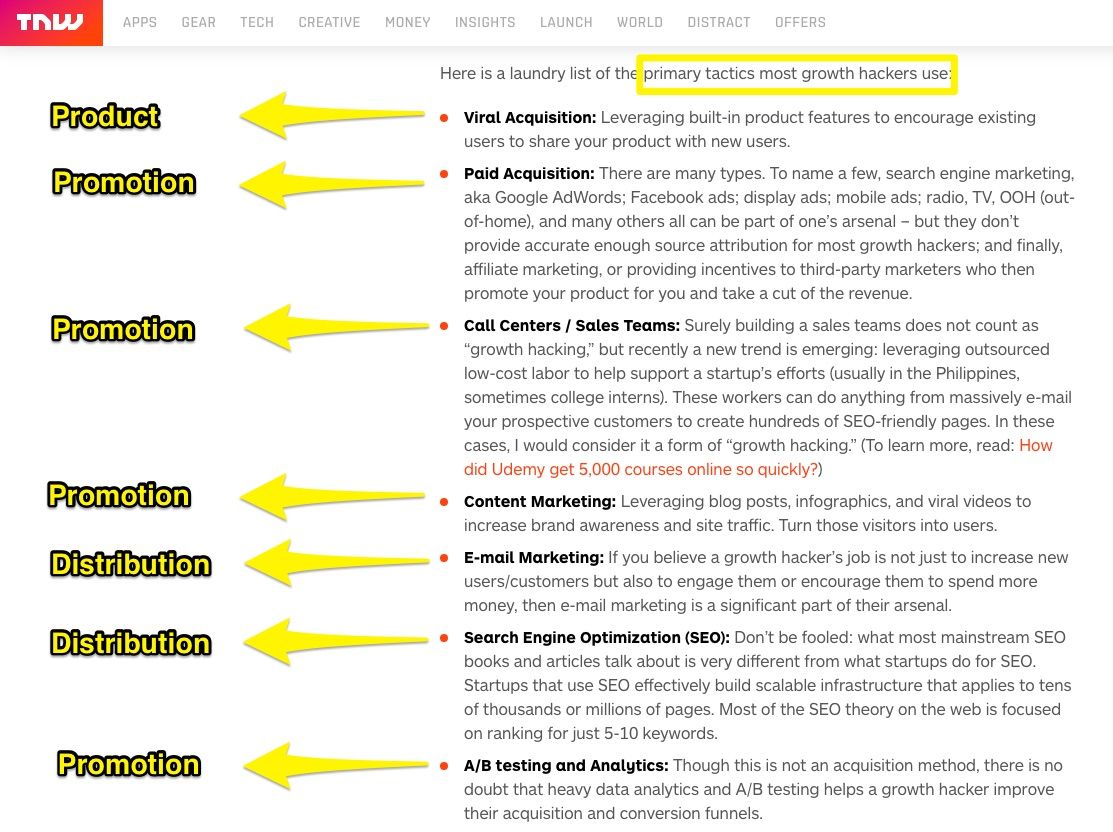
If you try researching the difference between marketing and growth hacking, you'll see this article from The Next Web. A reputable, tech savvy site that's going finally lay the issue to rest. Perfect.


And it's a good read, which culminates in pointing out the laundry list of tactics that commonly differentiate growth hacking from marketing.


However, when you really start to analyze these tactics under a broader understanding of what marketing is or involves, you'll quickly start to see that these new-fangled tactics still look a whole lot like mid-century marketing.

the-next-web-growth-hacking-tactics


When you get right down to it, a lot of the daily activities that define growth hacking resemble much of the same seemingly outdated marketing concepts from nearly 50+ years ago.


Again, let's get specific.


Let's take a look at some of the most fundamental 'growth hacks' used by successful startups over the past decade to reverse-engineer their meteoric rise.


Example #1. Product Hacks


Long before Gmail, there was Hotmail.


The idea of free email, at the time about twenty years ago, was kinda nuts. And it also presented a few obvious drawbacks to classic growth methods like advertising.


(Yes, even Stone Age Startups understood how CAC affects LTV. That wasn't just a YC thing for you millennial hipsters.)


Instead, Hotmail decided to leverage their existing 20,000 user base to kickstart one of the first examples of 'viral acquisition'.


In the bottom of each email, they added the simple tagline: “Get Your Free Email at Hotmail”.


Commonplace now, but keep in mind that this simple edit was pretty revolutionary at the time. Within six months, their userbase shot up to a million users.


Fast forward a bit, and another Silicon Valley darling was quickly finding out that paying more for a new customer than they're worth is a recipe for disaster (and bankruptcy).


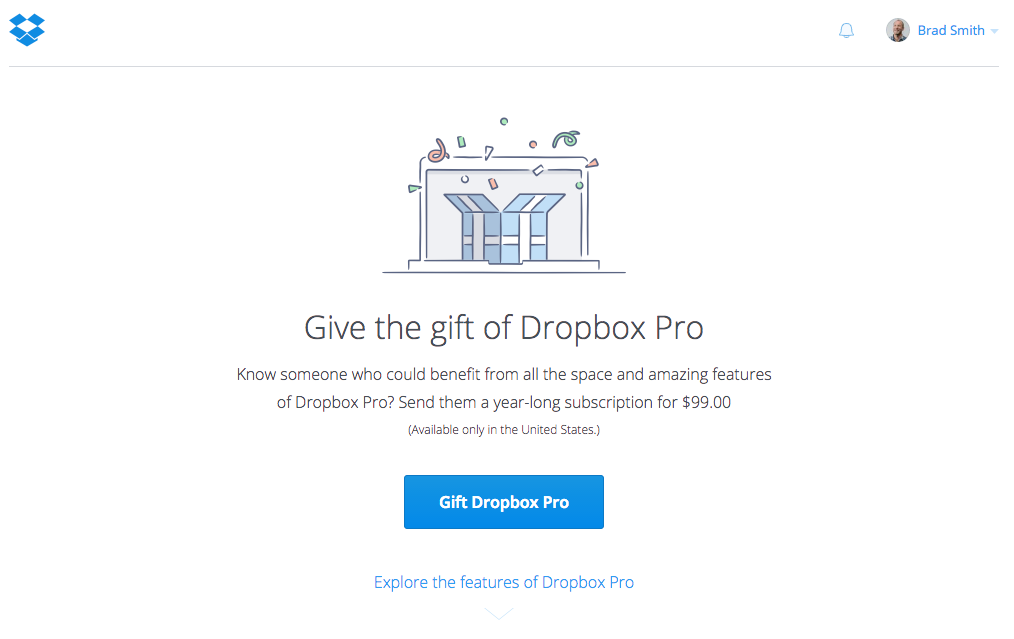
In response, they created a simple referral program that resembled Hotmail's early tactic. Each new person that signed up for an account through this referral process got 500MB of free storage.


And in a little over a year, Dropbox grew from 100,000 users to 4 million.

give-dropbox-pro


Now there are many reasons these tactics succeeded. For one, getting something (for free) from your friend is a more compelling proposition than buying from a stranger over a questionable banner ad.


However, these are still simple product decisions too at the end of the day. (1) You have to have a good product to begin with – otherwise all the Promotion in the world won't help. And (2) creating new features in the product are what enable it to be shared through a referral mechanism.


But it also brings up an important concept from, you guessed it, the 60s.


In marketing promotion, there's Reach. And Frequency.


  1. Reach: The number of new, unique people your message is seen by.

  2. Frequency: The number of times that message reaches these people.


Admittedly, very simple. But also effective.


You'll notice that in both cases, Hotmail started with an initial 20,000 users while Dropbox had 100,000. If you're going for viral growth through recommendations, you need an existing user base to tap.


Why? Reach and frequency.


Wanna make numbers go up? Increase those two things.


The first is pretty easy. Just get more eyeballs to see your message.


Here's how.


Example #2. Distribution Hacks


Back in the day, distribution used to be more focused on Place.


That's because we lived in small towns and cities where you literally had a physical storefront. And even when times evolved, when products needed to be shipped across different factories or warehouses or retailers, you relied on heavily on distribution.


Technically, it means the “process of making a product or service available for use or consumption by a consumer or business user, using direct means, or using indirect means with intermediaries”.


That brought about different distribution methods like intensive, exclusive or selective (all of which mean exactly like they sound).


Today, this all seems archaic because you're mainly going direct to consumers through the interwebs.


But here's the important part, summed up by Wikipedia:


“The role of the marketing channels is not only focus on the participate in demand satisfaction by offering goods, but also need to stimulate demand through information, creating proximity and promotion by customer (Balasecu, 2014). In other words, distribution channels for the product is a system process.”


Distribution hacks are some of the most common in growth hacking lexicon, and it's roots are still firmly planted in the work from previous decades.


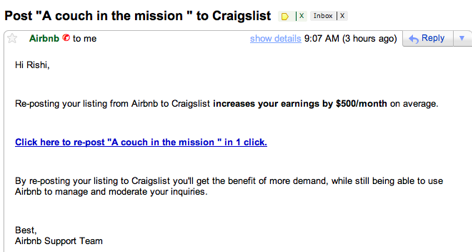
Airbnb didn't magically become the one-stop shop for letting strangers crash on your couch. No; they 'borrowed' (or ripped off) Craigslist's user base (thereby massively extending their own distribution). They created simple tools to allow Airbnb users to also get their properties in front of the massive number of people already searching and browsing Craigslist.

airbnb-craigslist-email
Image Source


This approach is nothing new.


Back in the good old days, YouTube used a similar form of 'platform hacking' (read: distribution) to piggyback on MySpace's success (and userbase of around 25 million uniques in 2005). Unlike many other video platforms at the time, YouTube openly allowed (and encouraged) users to take advantage of their embed code and spread their content to larger platforms like MySpace.


myspace-popular-again-hipster-meme


Facebook used selective (or exclusive) distribution when they started off as a closed network only open to specific colleges. That exclusivity idea was then borrowed by Pinterest who initially used invite-only status to increase their desirability and cachet.


In each case, distribution – a classic marketing consideration – was central to growth.


Example #3. Promotion Hacks


Despite the semantic issues already discussed at length, advertising still plays a role in today's 'growth hacking' playbook.


Look no further than Eric Ries' Lean Startup (which I can't believe was published in 2011 already), where advertising shows up as one of the three engines of growth to grow a sustainable business.


Paid acquisition, once again, isn't some completely brand new concept that evolved from the halls of MIT or Stanford. Instead, it's been employed successfully for half a century since the Mad Men era.


Sure, advertising channel options were incredibly limited back then. Which meant it was far easier to get your stuff to stick out. And sure, they didn't have fancy cohort analyses or funnel tracking tools, instead largely relying on correlation measurements to sales.


But still.


Make more money than you spend ain't an original equation. And it's especially useful in today's world, where let's face it: true virality like some of the earlier examples is incredibly rare (not to mention, borderline lucky).


Just look at Noah Kagan at AppSumo, who has spent over $2 million on ads to profitably grow their business.
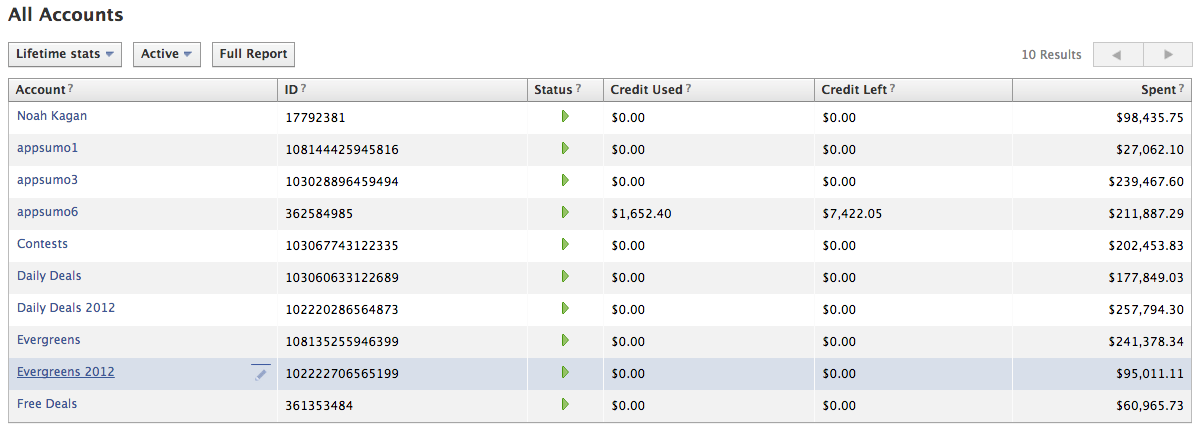

appsumo-ad-spend
Image Source


Or Netflix spending around $18 bucks for a subscriber when they make like $300 on each.


Or Groupon.


(Don't laugh. They still went public, bro.)


Sure they spent a sh*t-ton to do it, reportedly almost $200 mill in a single quarter according to the SEC. But that also helped them gain 33 million new subscribers. AND GO PUBLIC.


Point is: paid acquisition isn't a 'hack'. It's just called good (read: not terrible) advertising.


A few minutes ago you read about Reach, which can be increased through distribution and obviously advertising.


However advertising can also help bolster Frequency, which is important considering its curse (as Seth Godin describes it):


“The best members of your audience, the ones who are listening the most carefully, have to be bored/annoyed at the messages that show up after they take action. Some people pledge the first day of pledge week, or buy the book the day it comes out. Those folks don't want or need to hear the message again.”


“Worse, frequency creates a culture of less engagement. Since we know that just about every important issue, opportunity or warning is going to be repeated a few times, we don't engage as much. Why bother to listen, we say, they'll just repeat it.”


The world ain't as simple today as it used to be. A single ad or message won't get someone to convert.


But multi-channel marketing, complete with remarketing ads or utilizing custom audiences on Facebook, provide another new twist on an old stand-by marketing principle.


Conclusion


Growth hacking can involve mind numbingly complex techniques to obsessively grow a new product.


It's difficult to pull off and takes truly creative thinkers who're able to blend strategy with technical chops.


But at the end of the day, a lot of what they're doing still sounds a lot like marketing when you think about it.


Not today's watered-down version of advertising or PR. But true marketing, how it was envisioned over half a century ago, at its theoretical high point.


Those days weren't perfect. And the models espoused can seem a bit dated at times.


However, you might be surprised to find that your new brilliant growth hacking idea didn't come from hitting refresh on Hacker News, but instead from looking through a few dusty books from the 60s.


About the Author: Brad Smith is a founding partner at Codeless Interactive, a digital agency specializing in creating personalized customer experiences. Brad's blog also features more marketing thoughts, opinions and the occasional insight.


Friday, 22 July 2016

Who Are Today's Small Business Buyers and Sellers?

The market for small businesses is sizzling-making it a good time to look into either buying a business or selling your current venture. Sales of small businesses are projected to increase in number this year, according to some 73 percent of business brokers polled by BizBuySell. Here's what else BizBuySell discovered about today's small business buyers (and sellers).


Small Business Sellers


As you might expect, small business sellers are primarily white men over age 50. Currently, 78 percent of small business sellers are male, and 22 percent female.


Today's small business sellers come from entrepreneurial families. Fifty-five percent have parents or grandparents who owned small businesses.


In addition, 58 percent of small business sellers have owned a previous business-in other words, they're serial entrepreneurs, the group most likely to value their businesses at over $1 million.


Why are business owners selling? Retirement is the most common reason-not surprising since so many of the sellers are in their 50s and 60s. However, 25 percent of those who are selling their business to “retire” define retirement as working on another business.


Some 21 percent are motivated to sell their businesses by burnout. On a more positive note, 20 percent say they want to move on to own a bigger business.


More than four out of 10 female business owners in the survey are in a position to sell their companies immediately, compared to just 26 percent of male business owners. However, women business owners are more likely to say burnout and health issues are motivating the sale of their business. And just 13 percent of female business owners plan to buy another business after selling their current one, compared to 32 percent of men.


Small Business Buyers


While small business buyers are more ethnically diverse than sellers, most are still white men, typically in their 40s and 50s. However, younger business buyers tell a different story: the younger the buyers are, the more ethnically diverse and gender-diverse they are.


Most small business buyers are currently full-time employees (64 percent). Interestingly, nearly half (46 percent) have previously owned a business.


The number-one reason for buying a small business is “the chance to be your own boss”-63 percent of all buyers cited this motivation. Other top reasons are the desire to make more money. And nearly one-third (32 percent) are buying a business as a side project or source of supplemental income.


What's holding potential small business buyers back from signing on the dotted line? Raising enough capital is the number-one challenge, cited by 41 percent. The risk of failure (36 percent), industry outlook (29 percent) and timing (20 percent) are other hurdles.


When it comes to financing sources, 50 percent of buyers will pay cash for the purchase, 51 percent will use bank financing, and 45 percent will look for businesses offering seller financing. Female business buyers are less likely to be using seller financing, and more likely to target businesses valued at under $200,000 or nonemployer businesses.


The post Who Are Today's Small Business Buyers and Sellers? appeared first on AllBusiness.com

The post Who Are Today's Small Business Buyers and Sellers? appeared first on AllBusiness.com. Click for more information about Rieva Lesonsky.


Thursday, 21 July 2016

5 Reasons Why Having an Online Presence Is Essential for Your Small Business

By Jes Gonzalez


The other day, I was hunting for somebody who could thread my brows (which sounds scarier than it was). I was seraching the day before I had to attend a fancy event. The first place, which was recommended to me by a friend, could not take me, as the lady was only in during the second half of the week, much to my dismay. What was I to do?


I went to Google and typed in the appropriate search terms, holding my breath. Please, oh please, let something come up so I don't look like a werewolf in all the event photos, I begged. The first result was the place I had already called, but the second I had never heard of before.


I clicked the website and quickly found an online booking option, which was great, as I can be a little phone shy. After checking the prices and the hours of operation online with a few simple clicks, I booked the appointment. I received an email verification minutes later and headed out to find the place–it looked like an apartment building.


Confused, I pulled out my phone, which verified that I had arrived at the correct location. I hopped up the steps to the second floor and, lo and behold, there was a sign for the shop. After going in, one of the first things the owner said was, “How did you find me today? Just curious.” Without really even thinking about it, I replied, “Oh, I just Googled you.”


No big deal for me, but bam! One Google search and that small business owner secured a new customer.


Why You Need an Online Presence


Here's the point: having an online presence can make or break a business, especially for small business owners. Because I was able to find the website and all the product and service information effortlessly, I was happy to book an appointment. Further, I booked my appointment online, at a business I'd never heard about, in a building I'd never seen. That day, the owner secured a new customer that she wouldn't have had otherwise, and most importantly, I didn't have to look like Bigfoot for my event.


Thank goodness she had an up-to-date website, right? Having an online business isn't only beneficial for you–it's also one of the best things you can do for your consumers.


While it's true that many small businesses don't have a ton of resources or a lot of time to spend building an online presence, having no time is no problem. The actual website can be quite simple, and all it needs is a little sprucing up every now and again, including the aesthetics and the actual content. Setting up a few social media sites will help you to alert your clients and customers about updates, and even if you can only post once every couple of weeks, you'll soon build authority online.


The time dedicated to building an online presence for your business is time well spent. Here are five reasons why it's so important to build an online presence, especially if you're a small business owner:


An Online Presence Enhances Accessibility


A huge reason to build an online presence is because your competition is probably building an online presence. If a consumer is able to Google your products or services in your city or town, and you are nowhere to be found, then they have no way to find out about you. Even worse, they'll likely come across your competition and take a look at them online instead of seeking you out offline. To make sure your name appears at the top of Google's search results, check out our tips for SEO.


Having an online presence increases accessibility for your clients or consumers. It's an effortless way for them to browse prices and hours and compare all these factors with your competition with a simple click. And it's important that it's effortless-nothing should take too long to load, and nothing should be difficult to find. Any questions they may need answered should be readily available on the site itself, and if they're not, then you should really be sure that your contact information is displayed in an obvious way.


An Online Presence Garners a Wider Audience


An online presence also allows the customer to come to you. Even when you're closed, customers will be able to purchase goods and services online. Basically, they're doing your work for you, even when you're not working yourself. There's no better give and take for a business than that. You'll be able to reach a wider audience, such as people who are unable to make it to your physical shop for whatever reason, be it disabilities, lack of transportation, or even because they're in another country.


Enabling your business to reach the widest audience possible will only be beneficial. The best part? When customers like what they see, they're willing to share the news of your products and services with others. Allowing these secondary customers to see that your site is up-to-date will ensure that you come across as professional. To enhance this, having active social media accounts will allow your products and services to be shared easily between customers, and then you'll have even more customers coming to your site. Win–win!


An Online Presence Builds Relationships and Consumer Trust


The beauty of having a site, blog, and social media accounts is that they enable reviews and comments about your products. As an expert in your business, you'll be able to answer any queries quickly and thoroughly. Any glowing praise that is publicly available will build your online presence and show even brand-new customers that you're a reputable business.


Even where there are less-than-kind reviews or comments, you can reach out to unhappy customers and resolve the issue so that your good name stays intact. It's better to know about an unhappy client so you can make amends and carry your name forward, rather than having an angry customer sharing their distaste for your business without you even knowing they were unhappy in the first place. Being able to right wrongs only helps to build customer loyalty. If you're not forgiven, at least other clients and customers can see that you tried and that you're willing to do everything in your power to keep customers happy.


An Online Presence Enables Effortless Marketing


Selling your products and services becomes an effortless process thanks to your online presence. Consumers will be able to browse your products and ensure that they're happy with their choice without feeling pressured by sales associates. And, as we said, you don't have to be there for this entire process to take place. Even at night, customers will be buying.


Not only is the process no longer limited, but it's also never-ending (in a good way!). Marketing yourself online can cost as much or as little as you decide. You don't have to mail out coupons or flyers; you can simply share them with the click of a button. You can advertise your products and services for free across your social media sites and on your blog. And, if you focus on improving your SEO, then the search engines will work in your favor.


An Online Presence Shows You What Works-And What Doesn't


Finally, an online presence allows you to see the effects of all these efforts. Tracking the metrics of your site and social media accounts is quite simple. You'll be able to see numerical proof of what works and what doesn't.

If you share a new blog post and see a huge spike in visits, then you'll know you've hit on some content that your audience likes to see. Being able to see the results of your efforts will allow you to make improvements in every aspect of your business.


Conclusion


Building an online presence isn't just beneficial to growing a small business-it's absolutely essential. By creating a blog, maintaining your site, and becoming active in social media, you'll be more accessible to a wider audience. You'll also build consumer trust and be able to market effortlessly. Best of all, you'll always be able to make improvements in all these areas.


About the Author


Post by: Jes Gonzalez


Jes Gonzalez is a magician and a mechanic; that is to say, she creates pieces of writing from thin air to share as a writer, and she cleans up the rust and grease of other pieces of writing as an editor at Scribendi.com. She knows there's always something valuable to be pulled out of a blank page or something shiny to be uncovered in one that needs a little polishing. When Jes isn't conjuring or maintaining sentences, she's devouring them, always hungry for more words.


Company: Scribendi

Website: www.scribendi.com

Connect with me on Facebook and Twitter.


The post 5 Reasons Why Having an Online Presence Is Essential for Your Small Business appeared first on AllBusiness.com

The post 5 Reasons Why Having an Online Presence Is Essential for Your Small Business appeared first on AllBusiness.com. Click for more information about Guest Post.


Wednesday, 20 July 2016

6 Ways to Create the Perfect Employee Onboarding Experience

You've made the transition from solopreneur to managing several employees. Each new hire feels like a valuable addition to your growing business, and you couldn't be more pleased. But when you have a team as small as yours, you want to make sure your new employees feel the same way.


From connecting over cocktails to shadowing your staff, your onboarding process should welcome your newest hires in the best possible way. That's why we asked six entrepreneurs from FounderSociety the following question:


Q. As a small business looking to hire a team for the first time, what elements create a successful onboarding experience, and what should I be aware of?


1. Cocreate a Work Plan With Learning Goals


 One of the best things you can do with a new employee on day one is to sit down and discuss what he/she wants to learn. Then work together to create a work plan that incorporates those personal learning goals. If people feel like they are learning, growing, and working on things they care about, they are much more likely to work hard and stay with your company. -Lisa CurtisKuli Kuli


2. Connect Over Cocktails


 When we onboarded our most recent employee at eFlirt, we met with her over cocktails before her first day to welcome her to the team. It's an untraditional approach, but it created a warm environment for us all to connect before the training began and the “to dos” piled up. She told me it calmed her nerves, and I noticed it created instant camaraderie with her peers and manager. -Laurie DaviseFlirt


3. Let Them Shadow Other Staff


Kathryn HawkinsBefore asking new employees to work independently, let them shadow you or other staff on existing meetings and projects. This way, they can understand what you do and how you talk about your work. When we hired our new project manager, she sat in on as many calls with clients as possible for the first two weeks. She was able to get valuable context on the work that we were performing before she began working on her own. -Kathryn HawkinsEucalypt Media


4. Set Expectations and a Timeline


John KohtThere's a lot to do when you onboard new employees: application, benefits, payroll, values, and much more. Rather than drop a book of rules and expectations on them immediately, try distributing them over the course of a few months. Start with getting them up to speed with your company and values, then slowly introduce rules and expectations. Have weekly one-on-ones and monthly reviews. -John Kohtkohactive


5. Emphasize Team Building


Ajmal SaleemI don't even want my new employees to work on the first day. I would rather they talk with my current employees in order to form a camaraderie. I want all my employees to enjoy coming to work rather than dread it. It can make a big difference. -Ajmal SaleemSuprex Learning



6. Hold an Open Dialogue


 At AlignedSigns.com, we believe knowledge can only bring about positive change. Holding an open dialogue that continually broadens the skill sets of our team members keeps employees from getting bored, clarifies expectations, and offers directions toward larger goals. Employees become integral value-adds to the business, and that stimulates retention rates. -Jessica BakerAligned Signs


The post 6 Ways to Create the Perfect Employee Onboarding Experience appeared first on AllBusiness.com

The post 6 Ways to Create the Perfect Employee Onboarding Experience appeared first on AllBusiness.com. Click for more information about FounderSociety.


Is It Too Early to Start Prepping Your Business for the Holidays?

“Black Friday” got its name for a reason. This is the time of year when many businesses get out from under “clearance sales” during the New Year and summer slumps; this is the time of year when businesses move out of the red and into the black.


Still, while you're in the midst of managing your summer schedule, the last thing you might be thinking about is Thanksgiving and the New Year. But should you have the holiday season in the back of your mind? In short, yes!


Here are a few things you can do to make the busiest (and potentially most profitable) time of year a little easier by planning ahead:


1. Plan your inventory ahead of time.


Inventory is a balancing act. If you have too much, you lose money; if you don't have enough, you lose sales.


Plan your inventory needs ahead of time. This includes inventory beyond products, such as office supplies. You'll need to be sure you have enough bags, gift wrap (if that's an option at your store), receipt tape and more. If you run out of these things during the holiday rush, you'll put yourself in a bad position. Plan ahead and stock up now.


2. Start making a big push to collect customer information now.


The sooner you can collect customer information, the sooner you can start promoting your business to these new, interested consumers. Train your team to start collecting customer information now. Hold a contest among employees to see how many new customers they can sign up to your mailing list. Or you can put a sheet out at your front desk or front register to encourage customers to sign up while checking out.


The goal is to have more customer information on hand so you can make this your best holiday season yet.


3. Consider your staffing situation now.


Busy season means more traffic and the need to hire temporary employees to cover the extra business. Although you might not be able to start hiring temporary employees, you can start planning for how many people you'll need to bring on board, as well as when and how you'll hire them.


Another consideration: your staffing schedule. Scheduling during this time of year is especially tricky. Some people want to have time off to be with family while others appreciate the extra hours. Have a plan in place to balance these requests quickly. For example, you might want to consider using a scheduling process that allows your team members to work together to switch shifts. This way, you're less likely to be left in a bind without enough team members to cover the influx of new business.


4. Encourage social media check-ins.


When a customer checks into your business, her friends see it too. Suddenly, your business name is being shown in front of other like-minded consumers. This can plant a seed and encourage people to consider your business as the buying season begins.


It can also show the customer's friends and family that she enjoys buying from you, making them more likely to head to your stores to check her present off their holiday shopping list.


Get Ready


The holidays will be here before you know it. Get ready by stocking up now, planning your staff scheduling, and growing your customers. With all of this finished ahead of time, you'll be in a better position to have your most profitable holiday season yet.


The post Is It Too Early to Start Prepping Your Business for the Holidays? appeared first on AllBusiness.com

The post Is It Too Early to Start Prepping Your Business for the Holidays? appeared first on AllBusiness.com. Click for more information about Jon Forknell.