Wednesday, 22 June 2016

Which Matters More: Traffic or Testing?

In recent years, there has been a shift in attention from traffic to testing.


It makes sense, it's becoming increasingly hard to win at online marketing. In many ways, it seems like the easiest way to get more out of your traffic is by improving site performance.


As exciting as the idea of conversion rate optimization is, though, the question remains:


Which affects your marketing campaign success more-traffic quality or site quality?


It's an important question to consider. For most marketers, time and resources are limited, which means you need to spend the majority of your time in the areas that produce the best results.


So, if you have to choose between refining your traffic and perfecting your site, which optimization will give you the best bang for your buck?


Running the Numbers


To evaluate how testing and traffic affect your marketing success, let's run a quick hypothetical.


Traffic


In this scenario, let's suppose that you are running paid search ads for your business. You've got a decent site/landing pages and-on average-you pay $4 per click.


Recently, you spent $20,000 on a new campaign that produced 5,000 clicks.


5k-visitors


That's a lot of traffic, right?


Unfortunately, there's a problem. Most of that traffic isn't actually interested in what you're selling.


As it turns out, the average paid search account wastes 76% of it's budget on search terms that never convert. In other words, 76% of paid search ad spend goes towards the wrong traffic.


For you, that means you spent about $15,000 on clicks that have no chance of converting.


Ouch.


They may have accidentally clicked on your ad…or they thought you were selling something different than you actually sell. Maybe you were simply bidding on the wrong keywords.


Thanks to all those irrelevant clicks, only 1,250 of your 5,000 site visitors are actually potential customers.


So, in terms of your relevant traffic, here's what your ad spend really paid for:


actual-visitors


Hm, that's not nearly as exciting. You might be paying $4 per click, but you're actually paying $16 per relevant click.


But still, that's nothing a little testing can't take care of, right?


Testing


Now, as a best practice sort of marketer, you ran an A/B test on all of that traffic.


Unfortunately, what you didn't realize was that you weren't testing 5,000 visitors. Remember, only 25% of your traffic is actually interested enough to potentially convert.


As a result, you thought you were testing this:
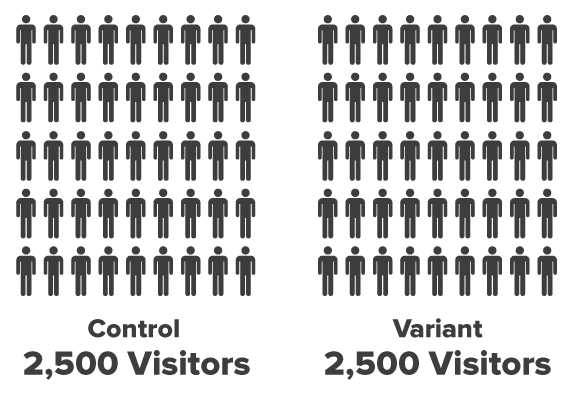

5k-test


When in reality, you were testing this:
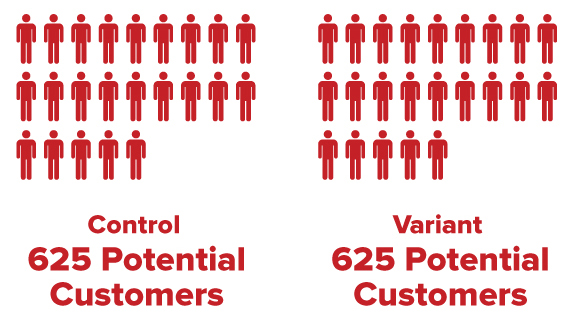

relevant-test


That's unfortunate, but you've still got enough traffic to run an effective test.


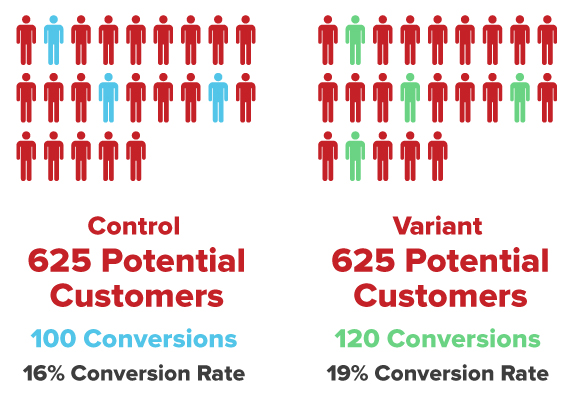
During your test, you get 100 conversions in your control (variant A in your A/B test) and 120 conversions from your variant (variant B).

relevant-test-results


Sweet! Clearly, your interested traffic responded much better (20% better, to be precise) to your variant.


At $5 per click, you just dropped your cost-per-conversion from $25 to $20.83. The results are statistically significant, so that's a win, right?


But wait, before you start throwing confetti, remember, you didn't pay for 1,250 relevant clicks.


You paid for 5,000 clicks.


Here's what your test population actually looks like:
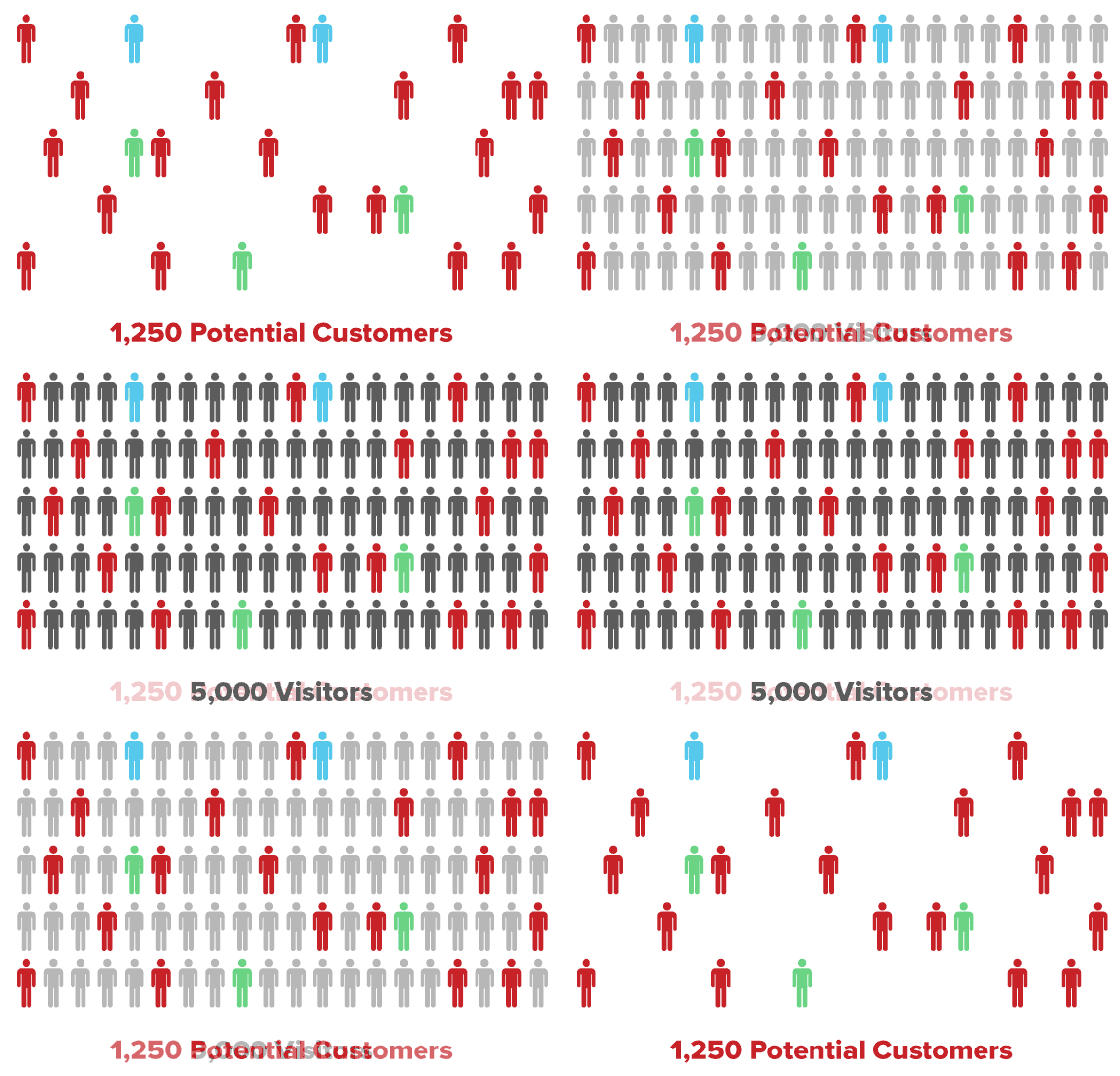

actual-traffic


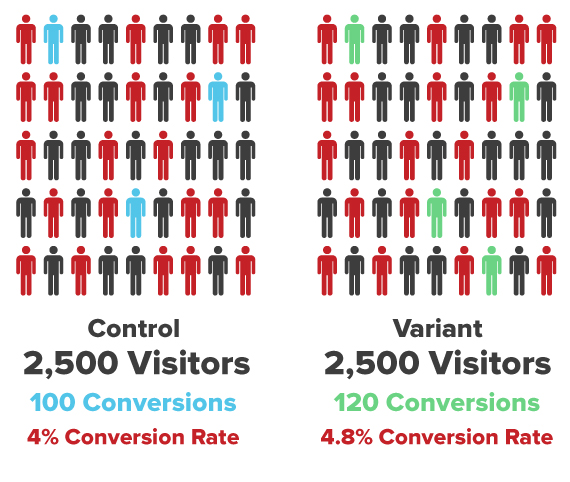
All of a sudden, your results don't seem nearly as exciting:

actual-test-results-1


Your test is still a success. Your conversion rate went up by 20%. However, all the “wrong” traffic you paid for has diluted your conversion rates to 4% and 4.8%.


And here's the real problem-your shiny, new, optimized cost-per-conversion is $83.33.


$83.33?


But wait a minute, when we were only looking at relevant traffic, the cost-per-conversion for your control was only $25!


That means your “optimized” cost-per-conversion is over 3x what you would have paid if you were only paying for the right traffic-even without testing.


Sure, your test helped reduce your cost-per-conversion, but you can't fix your traffic by testing your website.


What Happens When You Stop Paying for the Wrong Traffic?


So, if you can't test your way out of the wrong traffic, what if you stopped paying for those irrelevant clicks?


Well, over the years, we've used this tactic countless times for clients.


Here's what happens:
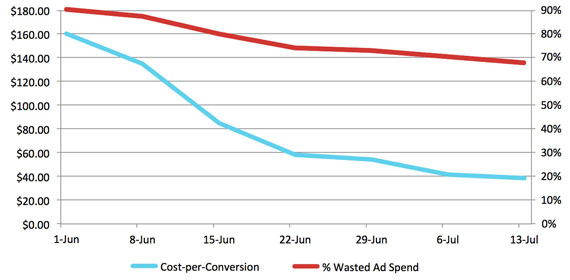

cost-per-conversion-vs-wasted-ad-spend-570-px


As you can see, as you waste less money on the wrong traffic, your cost-per-conversion drops…exponentially.


For this particular client, reducing their wasted ad spend from 91% to 68% cut their cost-per-conversion from $160 to $39.


And it happened in a matter of weeks.


Now, don't get me wrong. I'm a big believer in the power of testing. However, every successful test starts with the right traffic.


And the Winner Is?


So, traffic or testing…where should you be focusing your efforts?


To be honest, it really depends on where your campaigns are at. If your online marketing is putting the right traffic on your site, a great testing strategy can help you squeeze every last conversion out of your clicks.


However, if you're like most business, you're probably wasting most of your budget on the wrong traffic. In this case, dialing in your marketing campaigns will deliver the biggest and fastest results.


Here are 3 things to start with:


  1. Define your audience. Who is the “right” audience? What are their pain points? Do your ads speak to the right pain points?

  2. Review your targeting. Does your targeting match your audience profile? Are you targeting the right demographics?

  3. Use your analytics. Are your clicks producing conversions and sales? Which marketing channels are producing the best results? Do your results justify your spend?


Once your marketing is primarily driving the right traffic to your site, you can then use testing to really optimize your campaign performance.


And, since you'll be testing the right traffic, your results will be truly meaningful to your business.


Conclusion


Obviously, in a perfect world, you would have the time and resources to work on both traffic and testing. In the real world, though, sometimes you have to prioritize.


Having used both testing and traffic optimization for years to improve marketing performance, I'm definitely a big fan of both. However, testing works best when you are optimizing for the right traffic.


So, if you can only pick one, it makes the most sense to tighten up your traffic…and then start testing.


Traffic or testing-which would you pick? Where do you spend your time and why?


About the Author: Jacob Baadsgaard is the CEO and fearless leader of Disruptive Advertising, an online marketing agency dedicated to using PPC advertising and website optimization to drive sales. His face is as big as his heart and he loves to help businesses achieve their online potential. Connect with him on LinkedIn or Twitter.


Tuesday, 21 June 2016

3 Landing Page Mistakes Sabotaging Your ROI

Headlines are critically important.


They're one of the easiest things to change, and yet they have one of the biggest impacts on whether your landing pages gets read (or converts).


But here's the problem.


They can't do it all on their own. And there's a few things that need to happen properly BEFORE people even get a chance to read your headline.


Otherwise, people aren't even clicking to your page in the first place.


Here are three of the most common landing page mistakes and how you can fix them.


Mistake #1. Yawn-Worthy Offers


The elements on your landing page are important. They have a direct impact on conversions.


But what's compelling people to even visit that landing page in the first place?


Another basic free trial, or boring free consultation?


Not likely.


Wordstream analyzed $3 billion in advertising spend to understand what separated the top performers – those cranking out 10%+ conversion rates – from everyone else struggling with an average 1-2% (or less).


It wasn't because they used green buttons instead of an orange ones.


Instead, it was because they all used a “massively differentiated offer”.


Their initial value proposition was so unique, so interesting, that the same old free trial or consultation couldn't keep up.


What's an example?


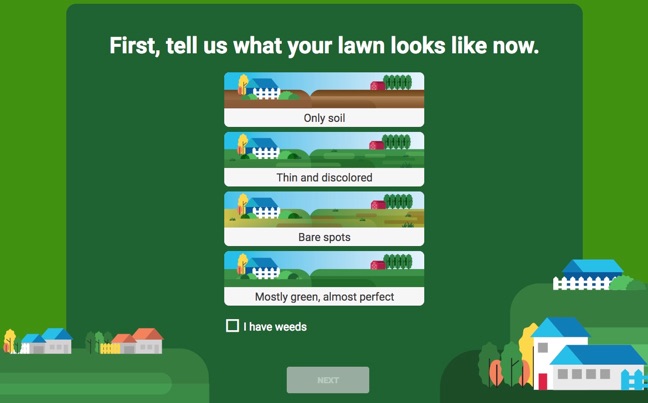
How about this unexpectedly awesome one from hardware store Lowes:


lowes-landing-page


They provide a complete lawn care maintenance plan with a few clicks of your finger.


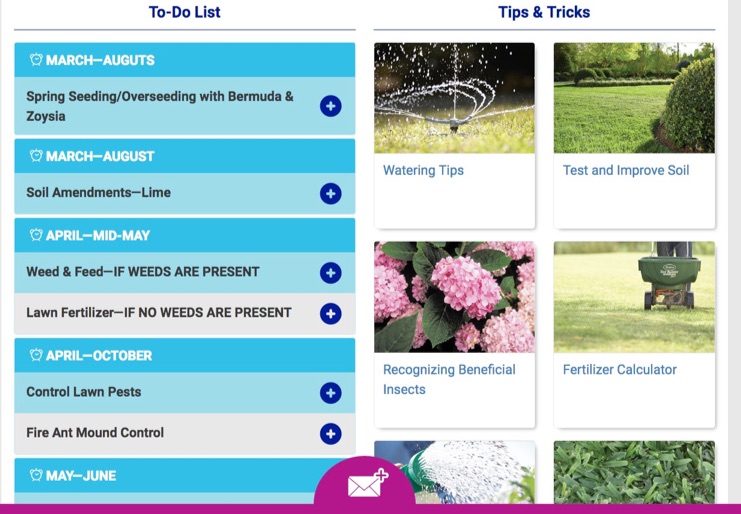
By entering only the most basic information, you get customized results for your lawn type and climate in order to maintain a beautiful looking year-round with minimal hassle.


lowes-content


This is a perfect example of a “massively differentiated offer”, because it provides extreme utility (or usefulness) to a customer by solving a pain point in an unexpected but enjoyable way.


Let's be honest: nobody cares about hardware store tools. (Except depressing old suburban white dudes.)


Lowe's understands this intimately. So instead, they sell the solution – like a yard in this case, or a hole that you'll use to hang your family's picture – and not the tools themselves.


sell-solution-not-tool


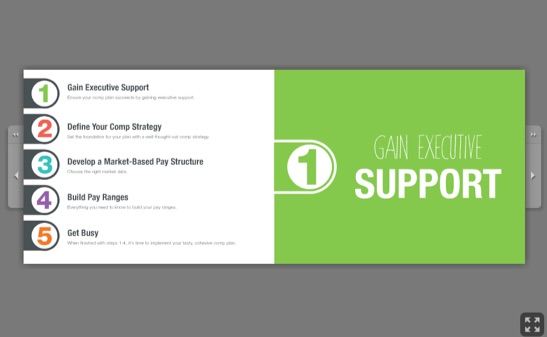
PayScale is another one of my favorite examples because on the face of it, their business isn't very sexy (they provide salary profile database and software). Yet that doesn't hold them back from pumping out tons of interesting interactive content pieces.


One example includes a guide to compensation plans; a beautifully designed walkthrough that informs while also somehow managing to entertain with a light, casual, friendly tone.


payscale-landing-page


Two very different examples so far, but they share a lot in common. Specifically, they're both:


  • Useful: Alleviating customer problems with a quick and simple guide or tool.

  • Timeless: The offer isn't tied to an expiration date, or trending topic that will die out.

  • Mass appeal: Both offers are insanely easy to promote. In other words, people actually care.


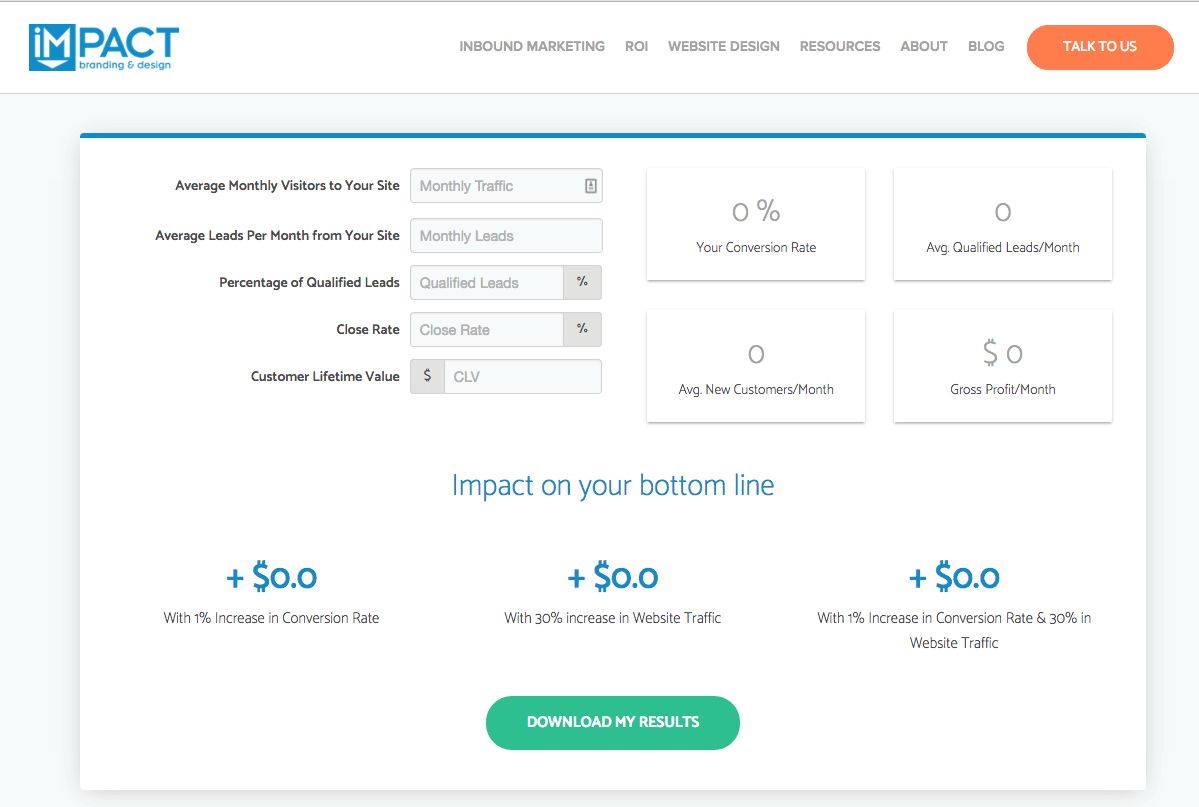
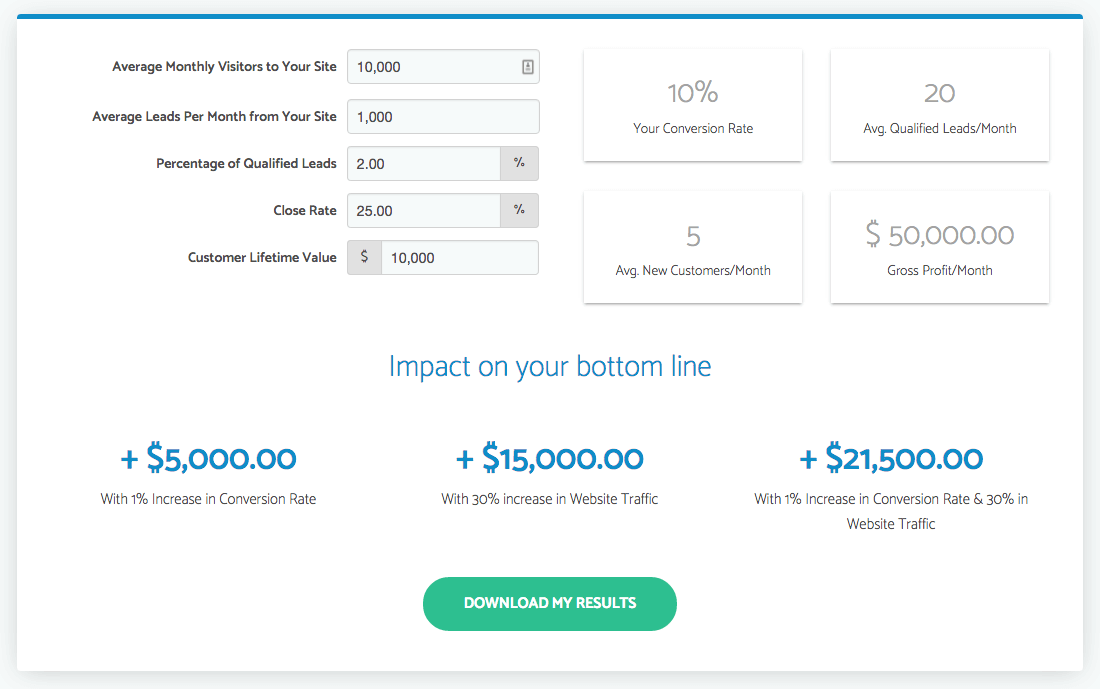
Marketing agency IMPACT has created another excellent example with their inbound marketing ROI calculator.


People reading this blog already know all about inbound marketing. However compared to the real world (you know, like the other 95% of the world's population that doesn't work in software or marketing), MOST people have no idea what it is (or why it's beneficial).


That's why IMPACT's ROI calculator is so powerful. It instantly distills the primary benefits of all that content work down to few important numbers.


impact-roi-calculator


Pricing with Confidence says the key to getting the price you want, is to sell value through its quantitative benefits. That means showing a positive change in conversions, traffic and potential sales, which should outweigh the costs of your services.


impact-roi-calculator-results


A final example comes from my agency's client, United Material Handling. On the face of it, they're another 'boring', unspectacular case.


However what they did already have in store was an internal system that scanned every single piece of equipment arriving and leaving their location. That means they knew what they had on hand.


On-hand product availability is one of the primary purchasing motivations for their clients. So we wanted to give that visibility to customers, too.


Directly from their website, customers can now search a real-time inventory system to get an idea of (1) if they have their product sizing, (2) if it's in stock, and (3) what a cost estimate might look like – based on quality.


united-material-handling-landing-page


The common thread throughout all of these examples is to:


  1. Identify what makes the company truly unique. What do you have that no one else does? Whether that's data, creative resources, technology, or whatever.

  2. How can you package that in an interactive way that enhances the experience and usefulness. For example, using data to create beautiful infographics like PayScale does is a much better use than just expecting people to wade through endless Excel workbooks.


An interesting offer, while the first step towards giving people a reason to care, is just the beginning.


The next mistake is another that's all-too-common, yet rarely talked about.


And that's a shame, considering it's one of the primary reasons 74% of people leave your website within five seconds.


Mistake #2. Sluggish Page Loading Times


It doesn't matter how good your headline is, if people don't stick around long enough to read it.


People equate page loads with usability in most cases.


And they're right. But it affects much more than just people's opinions.


It's one of the primary reasons people leave your website, with an estimated 50% leaving if it's not up within only three seconds.


It negatively affects conversions. Meaning lost revenue.


And it negatively affects SEO. Meaning less visibility.


The first step is always acceptance.


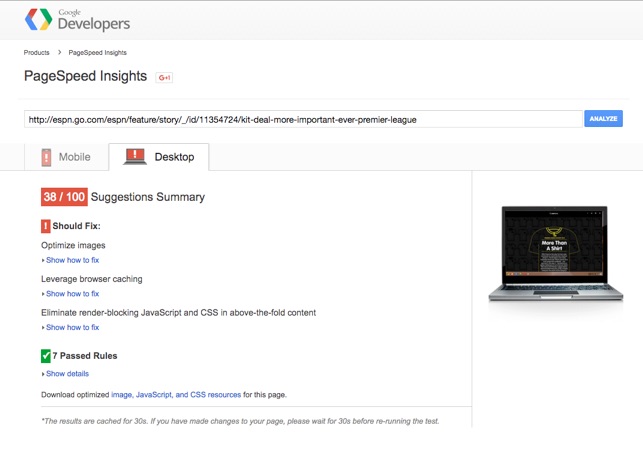
If you're relatively tech-savvy, you can pull up Pingdom to get a complete reading of your site.


If you're less so, Google also provides an excellent, easy to use option that will give you a breakdown of speed issues holding you back (along with a few simple tips to fix each one).


pagespeed-insights


Many times you'll experience poor page loading due to bad code. 'Bloated code' full of extra (or simply bad) stuff can require significantly more resources.


In any case, fire your developer.


Just kidding. In fact, it might not be their fault. Remember that awesome slider (sarcasm) you and the other department heads LOVED. They're notoriously terrible for usability, conversions, and you guessed it – speed.


rotating-homepage-slider-meme
Image Source


One of the most common speed issues we see deals with images.


They're too big. There's too many of them. Their file size is 3GB each even though it's only being used for a 150x150px box.


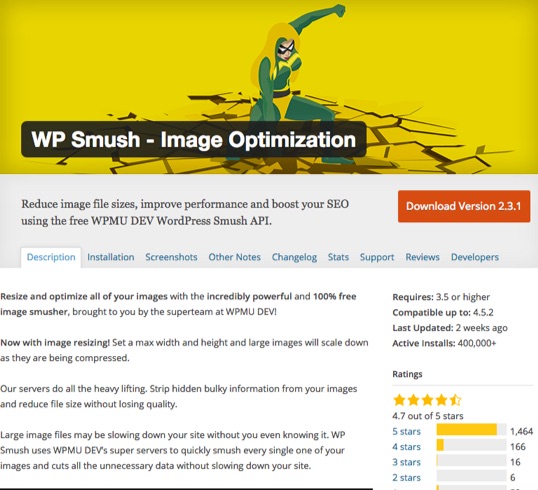
In theory, you should crop and scale each and every single photo for the exact space it's going to fit on your website. But at the very least, you should also compress them with a tool like Compressio.io or a WordPress plugin like WP Smush.


wp-smush-wordpress-plugin


(Don't even get me started on video. Just use Wistia already.)


Last but definitely not least, get off Bluehost. Seriously. It sucks.


No matter what all those hippy self-help bloggers try to tell you. (It ain't a surprise that they also pay out $5 million to affiliates in a year.)


The best optimized website on a terrible server will still be slow. Which means saving a few bucks on cheap hosting will almost definitely cost you more in the long run due to lost search visibility or lost sales.


Especially if you're running on WordPress, which while awesome, still needs some tweaks. If you aren't a server admin black belt, just let someone else manage it like Pagely or WPengine.


Mistake #3. Cluttered, Confusing Design


50 milliseconds.


That's the time it takes for a Lamborghini Aventador to switch gears (fun fact!).


It's also the time it takes for people to form a first impression of your website, leading to them staying or bouncing.


The bulk of that split-second decision is decided on, you guessed it, your design (a whopping 94% of the time).


The key to providing a happy first experience in those first few critical moments is to not make people think. Each landing page should be clean, simple, and clearly organized to help visitors immediately understand where everything else and how to navigate around.


Start with the experts to get those creative juices flowing. Go check out Unbounce's landing page templates to get some basic layout inspirations for how yours should look.


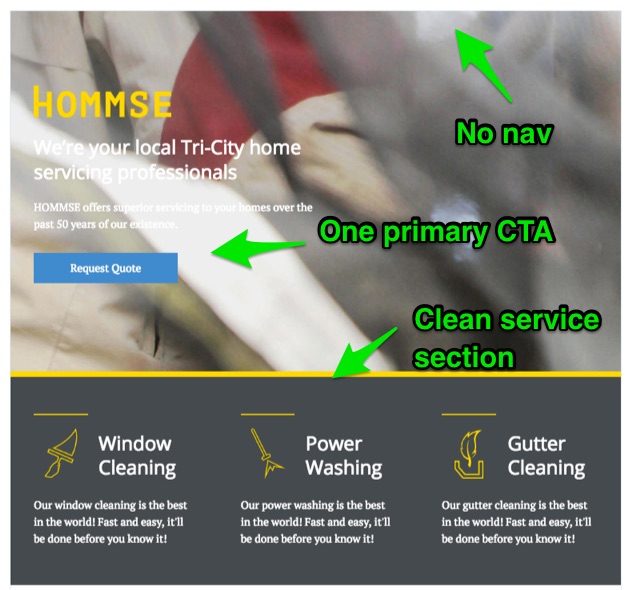
For example, here's a random one that follows this clean and simple approach.


hommse-landing-page


There's no navigation listed to distract users from navigating to additional pages. There's only one primary CTA button that's big and bold. There's also a simple, clean services section to help support whatever the page is about.


Another place to get ideas is Themeforest's landing page section. Look up the best sellers in the last 12 months to see the cream of the crop.


For example, under their RGen landing page product is this event page:


rgenesis-landing-page


Again you see some good design principles in action. The CTA form has a different colored background to help draw your eye line. There's a big, bold headline section with a countdown timer underneath to create urgency. And there's a logo section at the bottom where you could add credibility-boosting partners, or highlight sponsors of the event.


The important thing to note here is that they've expertly used the colors and layout to give you a visual hierarchy of where your attention should go first: (1) CTA first, (2) then headline with countdown before (3) finally the logos on the bottom.


Designers who excel at print, even big-budget ad campaigns or magazines, are average web designers at best.


The reason being? The web is an interactive medium, where design = function, not art.


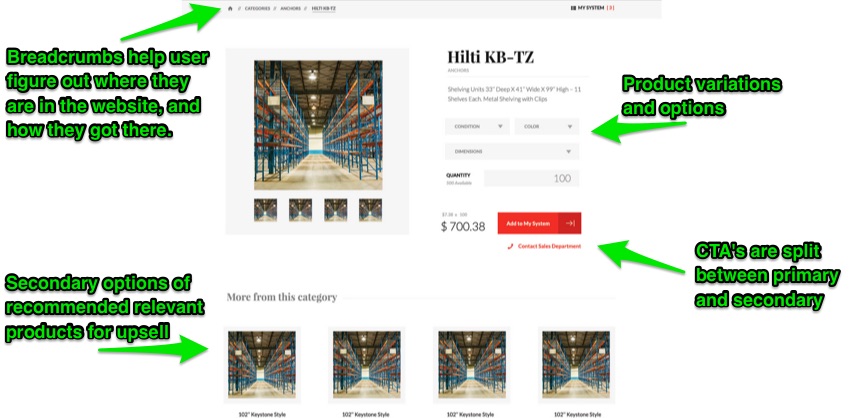
Here's another example from the aforementioned United Material Handling, this time with an emphasis on how design tells the user what to do next.


hilti-landing-page


Breadcrumbs help visitors figure out how they got here (in other words, where in the website's organization they're at currently). The product option dropdowns feature different shading that's more subtle than the CTA's. And even though there are two CTA's with the same color, the size, style and placement help you tell which is the primary and which is the secondary.


If website visitors make up their minds about your site within 50 milliseconds of landing on page, they literally don't even have time to think, analyze, or hunt for information. Because if it takes much longer than that, they're gone.


Conclusion


The individual elements on a landing page can influence conversions.


But A/B testing the color of a button is irrelevant if visitors aren't even getting to your page or leaving after just a few fractions of a second.


You need a differentiated offer to compel people to click in the first place. Your page loading times need to be instant so people stick around. And your overall page layout needs to be cleanly organized so that visitors immediately know what they're supposed to do.


Fix those things first, making sure that you're getting visitors coming in droves and sticking around long enough to read what's on each page, before obsessing too much over your headlines, hero images, or CTAs.


About the Author: Brad Smith is a founding partner at Codeless Interactive, a digital agency specializing in creating personalized customer experiences. Brad's blog also features more marketing thoughts, opinions and the occasional insight.


SEO for Small Businesses: Your 5-Step Guide to Improving On-Site SEO

Search engine optimization (SEO) remains a top concern for many large and small businesses, but many smaller companies don't have the resources or time to gain a solid understanding of how it all works. The result is that many small businesses are lacking the most basic SEO skills, which can turn search engine optimisation into a confusing and dreaded subject.


Whilst SEO is complex and often requires expert guidance, the basic techniques are easy to learn and can be applied to a website quickly. With this brief guide, I've covered five simple (and, shockingly, even somewhat fun) content-based techniques to help smaller companies improve their website rankings.


SEO for Small Businesses


Google places a major emphasis on high-quality content across websites and it's important to adhere to these expectations. The search giant can be considered the driving force of the online universe, so this does mean you have to put the effort in and craft good copy.


In the not-too-distant past, many companies attempted to manipulate their way up search rankings with dodgy tactics (known as “black hat” SEO). Google put a stop to this with two algorithms (Panda and Penguin), which ushered in an era of “white hat” SEO that emphasized natural, high-quality content and SEO techniques.


The good news is it really isn't difficult to get to grips with the most basic SEO principles. For beginners, the main problem is understanding where to start. The answer to this is straightforward.


1. Keyword Research


Keywords essentially should sum up your business or a particular product or service you have on a landing page. Consumers search Google with keywords to find things, which means you want to be properly optimised to appear in front of your relevant audience when they're in a purchasing mood.


This makes keyword research incredibly important, but it can be daunting for beginners as there are many considerations available. Where do you even start?


The best way is to consider how customers might use keywords to search your industry. Brainstorm ideas and come up with around a dozen likely words or terms. You can then research which ones receive the most online searches with a free tool such as Google Keyword Planner (you'll need an AdWords account for this, which is also free). Enter your keywords and the tool will provide you with the average monthly searches for your selection. It will also provide a list of alternative keywords that may be more effective.


2. Website Content Updates


You'll also need to write properly to complement your new research skills. When Google's algorithms crawl your website, they're able to determine its relevancy; keywords help influence this and where you'll stand in search ranking results. In the past, this led to companies “keyword stuffing” their content, which these days could land you with a Google penalty.


For the best result, you need well-written articles. From my perspective, it's fantastic to see the craft of writing remain so important in our technological era. From a business perspective, it's an opportunity to harness strong copy to gain higher search ranking positions.


Website content. The content on your website should be written naturally and for your target audience. If your content is peppered with misspellings and grammatical errors, this will harm your chances of ranking in top position. Consequently, even if a full rewrite of your website is required, don't be afraid to take on the challenge.


Your content should include bold headlines and headers to draw visitors to key points alongside the select use of your keywords. Online readers tend to skim over content anyway (as you're likely doing now), so it's important to highlight your unique selling points (USPs) and calls to action (CTAs).


Deep linking. Whilst you're creating new content, consider improving the navigation across your website by linking anchor text in your copy to relevant landing pages. These navigational improvements can build your domain authority and site quality.


Don't go over the top, however. Including half a dozen links would be considered excessive, so use your best judgement and link to particularly important pages.


3. Write Your Meta Tags


Despite the importance of meta tags (title tags and meta descriptions), they're often misunderstood or ignored by small business websites. Many sites I've seen simply don't have them filled out properly. Google fills in the gaps when this is the case, taking away from you what is an excellent opportunity for free advertising.


Well-structured meta tags can help your business scale Google's search rankings and attract the attention of customers. So, with your keyword research under your belt, you can adjust your title tags and meta descriptions with your keywords and a bit of compelling copy.


How do you add them? If you use WordPress, you (or your web team) can apply them easily by installing the Yoast SEO plugin.


Title tags. These appear at the top section of search result blurbs and are a CTA and USP all in one. The trouble is, you have no more than 60 characters (including spaces) to write a catchy, optimised title tag.


A good structure would be as follows: Buy Your Black Shoes Online For Free Delivery | Company Name


The best tactic is to write naturally whilst incorporating target keywords. For instance, the following is considered spammy: Buy Black Shoes | Black Shoes Online | Awesome Black Shoes


Google would consider this an attempt to manipulate search ranking results, which highlights the importance of writing naturally. This does mean you'll need a properly written title tag for every landing page, which can be time-consuming. The results will be well worth it, though.


Meta descriptions. These appear at the bottom of search blurbs and explain what each landing page is about. You need one for every landing page as they provide an important description of what you do, so it's another chance to highlight your USPs.


They need to be less than 160 characters (including spaces) and should contain a target keyword, but do keep them natural and compelling to stand out from your competitors.


4. Follow Google's Quality Guidelines


With the above in mind, it's extremely important to stress that there are SEO guidelines to follow.


If you pursue black hat tactics, you can be hit with a Google penalty, which would (simply put) be a disaster. This is a contentious issue for many business owners, but we all must remember Google is also a business and we have to adhere to its (largely) reasonable quality expectations to benefit. Be sure to read its “Steps to a Google-friendly site.”


In short, white hat SEO is what you must aspire to. This makes your website natural and high in quality. It's essentially about not doing anything which Google would consider to be spammy. To get your strategy right, keep the following in mind:


  • Don't try to manipulate your way to the top of Google's search rankings (i.e., keyword stuffing your copy).

  • Produce unique and engaging content as often as possible, even if this means hiring a copywriter or SEO content executive.

  • Ensure your website is functioning properly on a technical level.

  • Have a mobile-friendly website-Google actively favours websites which are responsive to a small screen.

  • Create a blog and write for it as regularly as possible. This will keep your site fresh and it'll provide posts for your social accounts.


5. Monitor Your Progress


With all of this established, you'll no doubt want to track your progress. To keep up with your targeted keywords, you can turn to tools such as Moz to simplify what would otherwise be a bit of a nightmare (it's not unusual to have target keyword lists running into hundreds of results).


This can cost around $100 per month, but the myriad features the software provides are often highly useful. If you're committing to improving your SEO for the long run (which is highly advisable), a software tool such as Moz is essential. It allows you to effortlessly track your progress and it also provides all manner of insightful details on your monthly traffic and any crawl issues you have (such as missing meta tags).


Alternatively, to save money you can simply turn to typing your target keywords into Google and watching your progress firsthand.


Conclusion


These steps won't send you flying straight to the first ranking position, but they will help push you in the right direction. From there, you can consider your options on how to take your SEO strategy forward. Typically, this involves off-site SEO practices such as link building-this is a tricky area to get right, but a technique such as producing press releases is a good start.


For now, these basic on-site SEO techniques will allow your business to enjoy improvements in terms of on-site quality and improved search ranking reach. This can only bode well for your future.


The post SEO for Small Businesses: Your 5-Step Guide to Improving On-Site SEO appeared first on AllBusiness.com

The post SEO for Small Businesses: Your 5-Step Guide to Improving On-Site SEO appeared first on AllBusiness.com.


Monday, 20 June 2016

Negotiating Investment Banker Engagement Letters

Companies often hire investment bankers for capital fund-raising and M&A activities, and these investment bankers can be very valuable partners. In order to expedite the process and ensure that companies are agreeing to reasonable market terms, this article discusses certain guidelines that are appropriate when drafting an investment banker engagement letter.

Investment bankers always attempt to start the negotiation with their purported “standard form” letter, which is always one-sided in favor of the investment banker. It is a mistake for the company to accept the “standard form.” The company has the most leverage during the bankers' “courting” process, and a banker should not be told it has gotten the assignment until all of the language of the letter has been negotiated.


Responsibilities of the Banker


It's valuable to see a specific description of the services to be provided in the engagement letter. The services should include:


  • Financial advice and assistance in connection with the potential transaction

  • Financial analysis

  • Assistance in the preparation of a confidential information memorandum or executive summary

  • Coordination of efforts to ensure that prospective investors or buyers execute appropriate non-disclosure agreements

  • Coordination of meetings and visits of potential investors/buyers

  • Assistance in negotiating terms of the transaction

  • Good faith diligent efforts to secure a transaction (either M&A or investment) acceptable to the company

  • Assistance in preparation and review of an online data room

  • Assistance in the company's preparation of a disclosure schedule for a buyer or investor

  • Meetings with the company's Board of Directors to discuss the proposed transaction and its financial implications, and to provide advice concerning the proposed transaction to the Board

  • In connection with an acquisition of the company, the rendering of a fairness opinion and bring-down of the fairness opinion, if requested by the company

  • Other customary investment banking services for the transaction


Contact with Potential Investors or Buyers


The company should have the right to approve any contacts with prospective buyers or investors in advance, with the following sentence in the engagement letter:


Banker agrees that it will not contact any potential investor or buyer without the Company's prior consent.


Fees


Fees with bankers are always negotiable. Generally, I prefer to see the following:


  • There should be no upfront retainer, with any fee being payable only upon the close of a transaction. If there is a retainer, it should be small and creditable against the ultimate success fee.


  • If there is a fairness opinion fee, it should be creditable against the ultimate success fee.


  • In an M&A transaction:

    • The amount of the fee will typically range from 1% to 3% of the net consideration received by the shareholders, although the amount is deal specific. If a prospective buyer has already contacted the company prior to engaging the banker, the fee for that buyer should be lower than for a buyer procured by the banker.

    • The base on which the banker's fee is calculated should exclude any consideration attributable to cash or cash equivalents held by the company; cash the company receives from option exercises; and compensation for employment, consulting, or “stay” bonuses.

    • If a portion of the consideration to shareholders is deferred, escrowed, or contingent, then payment of the investment banking fee applicable to that amount should only occur when and to the extent that the shareholders actually receive the deferred consideration.

    • No portion of any “break up” fee payable to the company should be owed to the banker.


  • If the transaction is a fund-raising, then no fee should be payable for existing stockholders of the company who participate in the financing round.


  • Any minimum success fee should be avoided, as it produces a misalignment of interest between the company and the banker. If a minimum fee cannot be avoided, the success fee must be reasonable in light of the transaction. I have seen many deals where the minimum fee is no greater than $500,000. 


Future Rights of the Banker


Engagement letters should not provide that the banker has the unilateral right to be the company's banker for future IPOs, M&A assignments, or fund-raising. If the banker performs well on the particular assignment, then the company will evaluate whether it makes sense to hire the banker for a future transaction at the time of the future transaction. Any number of events could occur in the interim that would make it inadvisable for the banker to act as the company's banker the second time (e.g., loss of personnel, the banker being sold in a fire sale to a competitor such as the Bear Stearns/JPMorgan transaction, the company not being satisfied that the banker is best equipped to handle the new transaction, etc.).


Tail Obligations


Many engagement letters will have a “tail” obligation by the company, where even if the transaction is not satisfactorily consummated with an investor or buyer during the term of the engagement, a fee will still be owed to the banker if a future transaction occurs within a certain period. Such a tail is typically appropriate only if (a) a future transaction occurs within 9 months of termination of the engagement, (b) the future transaction occurs with a party who has signed an NDA with the company during the engagement term, and (c) the banker has not been terminated for a “Good Reason” (defined below under “Term and Termination”). The following is suggested language for an M&A assignment:


The Banker's right to a fee shall also apply if a Transaction with a “Qualified Buyer” closes within 9 months after this engagement is terminated, although no fee will be due to Banker if the Company terminated this letter for Good Reason (defined below), or if Banker terminated this letter. A “Qualified Buyer” is a person or entity contacted by Banker, and with which the Company and the prospective buyer executed the company's form of Non-Disclosure Agreement, both during this engagement. Banker will provide Company weekly with an updated list of Qualified Buyers.


Term and Termination


I prefer to see the following provisions with respect to the term of the engagement and termination rights:


(a) The term of the engagement letter should have a maximum, typically 6 months, and will automatically expire at the specified time frame. The “tail” would then apply.


(b) The company should be free to terminate the engagement for any reason on 3 days notice (and in that case the “tail” would continue to apply).


(c) If the banker terminates the engagement, the banker would not be entitled to any “tail” fees.


(d) If the company terminates the banker for “Good Reason,” no “tail” fee would be due.


I recommend the following language:


Company may terminate this letter at any time, and for any or no reason, on 3 days notice to Banker.


This letter will terminate automatically six (6) months after the date it is signed by both Company and Banker.


Company may immediately terminate this letter for the following (each a “Good Reason”) and in the event of such termination, the Company will have no further obligations to Banker for payment of any fees: if the Board of Directors of the Company notifies Banker that the Board has determined in good faith that (a) Banker has materially breached its obligations under this letter, or (b) has failed to perform reasonably adequately as the Company's financial advisor, or (c) that Banker or its affiliates has a conflict of interest detrimental to the Company, or (d) the Banker has suffered a material adverse change in its business and such change calls into question the Banker's ability to effectively render the services contemplated hereunder or (e) if for any reason ____________ [the key individual banker] is not the lead banker on the deal representing Banker and actively involved in the prospective Transaction.  


Banker's Compliance with Law


I expect to see the following covenants in the engagement letter:


  • Banker will comply with all applicable federal and state securities laws, rules, and regulations in connection with its activities hereunder and all applicable broker-dealer registration and compliance rules and regulations.


  • If the transaction involves a private placement of securities, Banker will take no action that will jeopardize the company's private placement exemption from federal and state securities laws.


Expenses


Engagement letters typically have a provision to the effect that the banker is to be reimbursed for all of its expenses in connection with the engagement. I expect to see the following limitations on expense reimbursement:


  • The amount of reimbursement is subject to a cap of $25,000, without the prior written consent of the company.

  • The reimbursement is only for out-of-pocket, necessary, and reasonable expenses incurred by the banker.

  • No reimbursement will be provided for legal fees incurred by the banker in negotiating the engagement letter.


Conflicts


Companies need to be particularly sensitive to the potential conflicts that the banker may have. Many engagement letters attempt to sanction all conflicts. For example, some bankers try to allow themselves or their affiliates to advise, invest in, or work with any company, even a direct competitor. That is usually not acceptable given the potential harm to the company. As such, I would expect to see the following paragraph inserted into the engagement letter:


Notwithstanding any other provision of this letter:


  • Banker represents and warrants that Banker and its affiliates have no material conflict of interest in connection with the assignment contemplated by this letter.


  • During the term of Banker's engagement, Banker and its affiliates will not invest in, or represent or provide services to, the following direct competitors of the Company (“Listed Competitors”): [list of names]


  • During the term of this engagement, Banker will promptly advise the Company in writing of any conflict of interest detrimental to the Company of which Banker's become aware.


Confidentiality


The engagement letter should have a confidentiality obligation of the banker. The following is suggested language: 


Banker will treat as confidential any non-public information relating to the Company or the proposed transaction, and will not use such information except as (a) required in order to perform services under this engagement, (b) such information becomes publicly available other than through disclosure by Banker or its employees, representatives or agents, or (c) otherwise required by law or judicial or regulatory process (and, in such case, only after seeking with the Company's assistance a protective order or other confidential treatment). This paragraph will survive any termination of this letter.


Announcements


The banker may give itself the right to unilaterally announce its role in the transaction. It is appropriate that any announcement about the transaction or the banker's role in the transaction must be first approved by the company.


Indemnification


The engagement letter will provide for very broad indemnification of the banker. For the most part, such indemnification provisions are industry standard (and often sacrosanct for the investment banker), but the following caveats are appropriate:


  • Indemnification is required only to the extent permitted by law.

  • Indemnification is not required if the damage primarily resulted from the bad faith, gross negligence, willful misconduct, or material breach of the engagement letter by the banker.

  • Reimbursement for legal fees and expenses should only be for “reasonable” legal fees and expenses.

  • Indemnified persons must provide prompt notice of potential claims.

  • No settlement of an indemnified claim is allowed without the company's consent, which consent will not be unreasonably withheld or delayed.


Copyright © by Richard D. Harroch. All Rights Reserved.


Richard D. Harroch is a Managing Director and Global Head of M&A at VantagePoint Capital Partners, a large venture capital fund in the San Francisco area. His focus is on investing in Internet and digital media companies, and he was the founder of several Internet companies. His articles have appeared online in Forbes, Fortune, MSN, Yahoo, FoxBusiness, and AllBusiness.com. Richard is the author of several books on startups and entrepreneurship as well as the co-author of Poker for Dummies and a Wall Street Journal-bestselling book on small business. He was also a corporate partner at the law firm of Orrick, Herrington & Sutcliffe, with experience in startups, mergers and acquisitions, strategic alliances, and venture capital.


The post Negotiating Investment Banker Engagement Letters appeared first on AllBusiness.com

The post Negotiating Investment Banker Engagement Letters appeared first on AllBusiness.com.


Which Marketing Channels Deliver the Biggest Impact on ROI?

A new report released by eConsultancy, in collaboration with Oracle Marketing Cloud, has revealed precisely which channels marketers feel deliver the biggest impacts on their return on investment, and how they bring those priorities to light within their respective teams and companies.


If your efforts to squeeze relevance out of marketing initiatives leaves you feeling frustrated and confused – it turns out you are not alone.  So which channels were the most worthwhile, and what efforts should you be investing more time and money into?  Let's take a closer look:


The Big ROI Catch-22


Not surprisingly, the report noted that the biggest roadblock to bigger investments in digital marketing was, simply, budget constraints.  Staff constraints followed second, as did company culture and an inability to measure ROI. The report itself asked the question, “Is the culture of ROI stifling innovation?”


This creates an interesting catch-22 in that if you cannot accurately measure your ROI, you can't provide the proof management wants.  And without proof, you don't get an increased budget to work with.  So which channels deliver the kind of proof you need? Here are the results:


Marketing With Confidence


ROI-channels


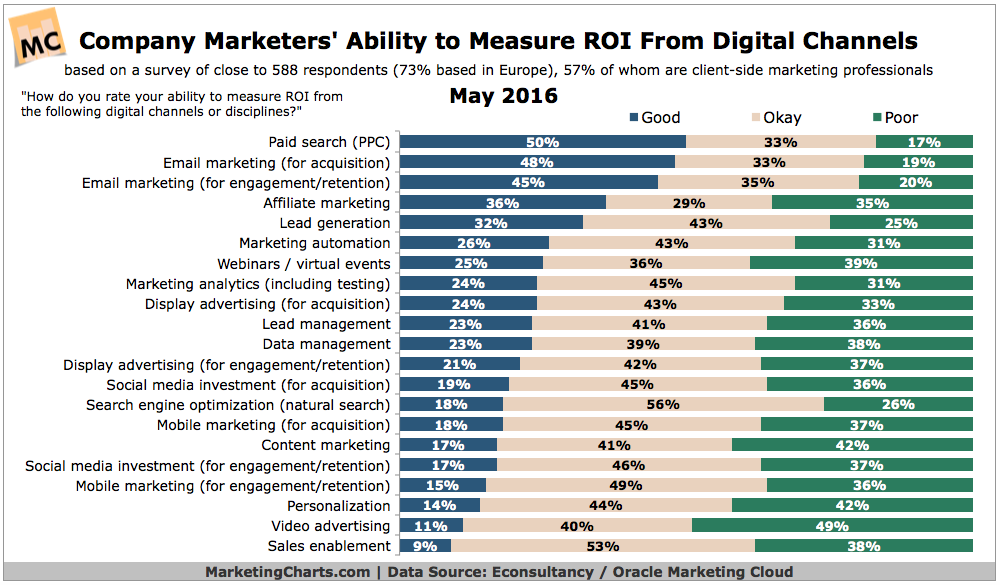
Marketers rate their confidence in measuring ROI from different types of digital channels


Looking carefully at this chart, you'll see why there's such a disconnect between marketing investment and marketing results:  paid search was the only channel where at least 50% of respondents noted that they felt “good” about ROI measurement. Other channels, including email marketing for acquisition, and email marketing for engagement and retention came close, but as the report notes, only a handful of companies would rate their confidence as “good” in these areas.


Note the considerable drop-off after this point – automation, analytics, even content marketing takes a notable hit here.


What's Causing the Drop?


confidence


As much as we embrace and encourage the use of many of these marketing channels, it's clear that marketers are struggling to take the information they collect and turn it into actionable insights that have marked results in their campaigns.  According to the report, there are three main factors contributing to such a steep decline in measuring ROI confidence:


Budget Plans


If you're thinking budget woes stem from a tight squeeze on marketing spending (on account of a lack of provable, measurable results), that's not quite the whole picture. Nearly 75% of respondents on both the client and supply sides expected their digital marketing technology spending to increase.


However, a little over half of those same respondents acknowledged that it was easier to get executive buy-in and support to increase those budgets. This means there's still quite a bit of work to do to convince the board room that these efforts are simply stepping stones toward the bigger picture of measurable results that they're seeking.


The Customer Experience


There's a lot of talk in marketing circles about “the customer experience” – but just how much of an impact does it have on spending? As it turns out – a lot.  Making sure the customer experience is seamless across all channels is an area of significant focus for marketing, sales and customer service teams alike, and having consistent, measurable results are at the core of marketing technology investments.


Because so much is being funneled into measuring and realizing the customer experience, precious little of the budget can be afforded to try more innovative and untested strategies.  More money is going toward acquisition efforts than engagement and retention, although as other studies have shown, this may very well be an exercise in focusing too much on quantity versus quality.


Company Culture and a Focus on ROI


And with so much of a focus on only measurable strategies with quantifiable results, innovation is hurting as well.  Only 35% of those surveyed agreed that they reserved a portion of their marketing budgets for more maverick, untested strategies – a sharp downturn from the 46-37% range from previous few years.


That being said, budgets are increasing not only in customer acquisition and lead generation, but also in other areas as well – namely email engagement and retention, acquisition over social media and data management.


And speaking of year-to-year differences, if you think they don't matter much in the long term – I have some surprising news.  There were quite a few significant changes from 2015's ROI confidence metrics compared to now:


What a Difference a Year Makes


EconsultancyOracle-Change-in-Ability-to-Measure-Digital-ROI-May2016


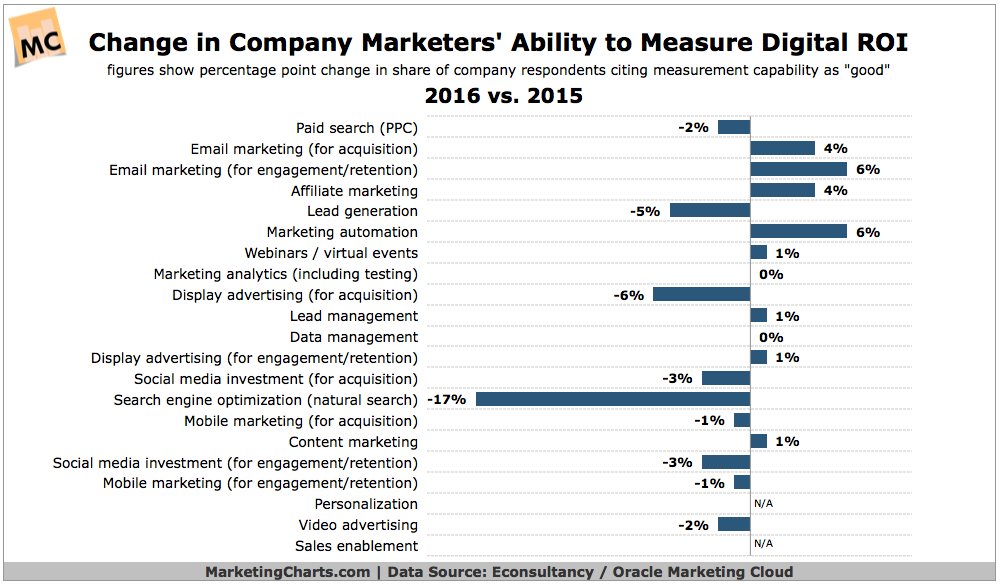
Marketers had a very different view of ROI confidence among specific channels in 2015


Look at the marked decrease in organic SEO.  With paid search as one of the consistent ROI confidence forerunners, it makes sense that natural search is slipping. Considering that search engine algorithms and updates become more and more complex, creating tools and platforms to accurately measure them has become harder and harder.


But also note the increases in areas such as email marketing, affiliate marketing and automation.  Our tools for measuring the “people side” (as opposed to the algorithm side) of things are becoming more intuitive.  The focus goes back to the customer experience, coming full circle in giving managers and other top level executives the measurability they crave while investing in a marketing plan built for consumers, not robots.


Getting the Proof You Need


So the question then becomes “how do we get measurable proof of ROI in campaigns if we don't have tools to measure it?” After all, everything from investments to innovation hinges on those numbers. So even if the campaign platform itself falls short in giving you the tools you need to dig deeper, you still have a secret weapon on your side: Kissmetrics.


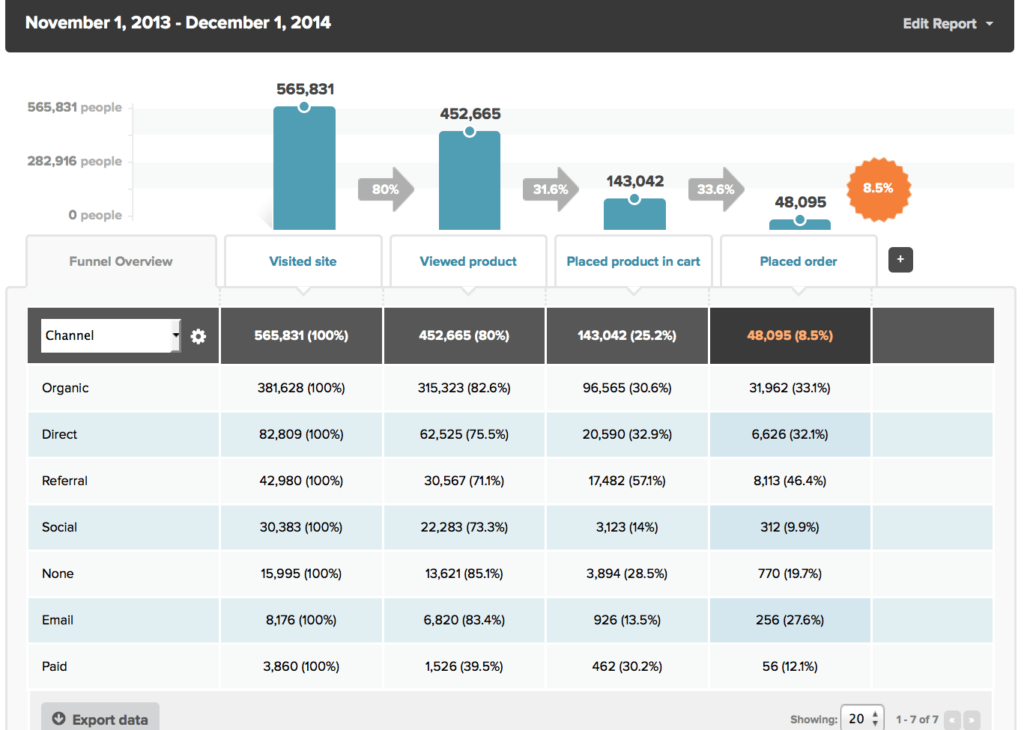
By using Kissmetrics, you can track multiple types of marketing campaigns and gauge their effectiveness accordingly. Kissmetrics intelligently segments customers into different channels,  which tracks visitors based on where they came from (social campaigns, pay-per-click channels, organic search and more). Not only does this show you which areas are worth your attention and spending, but also distinguishes between where traffic is coming from versus where customers are coming from – and that's an important distinction. What's more, you can track these same users across the customer journey – from the moment they become acquainted to your service until they complete checkout – and beyond.


ecommerce-funnel-channel-segmentation-kissmetrics-1024x730


This way, you get a clearer view of which type of marketing results in the greatest impact on revenues and conversion rates.  But that's only scratching the surface. You need to know which campaigns, not just referrers, deliver the biggest bang for the buck.  By using UTM codes in your URL tracking, Kissmetrics can show you that too. You'll be able to see, for example:


  • Which paid campaigns (right down to the keywords used) bright you the most sales

  • The LTV (lifetime value) of a customer coming from a paid campaign versus an organic search

  • Which products get the most shares on social media versus ones which result in sales (the two can have widely different results!)

  • Whether or not your PDF lead generation campaign leads to a sale (yes, UTMs can be used to track referrals that have downloaded a PDF too)


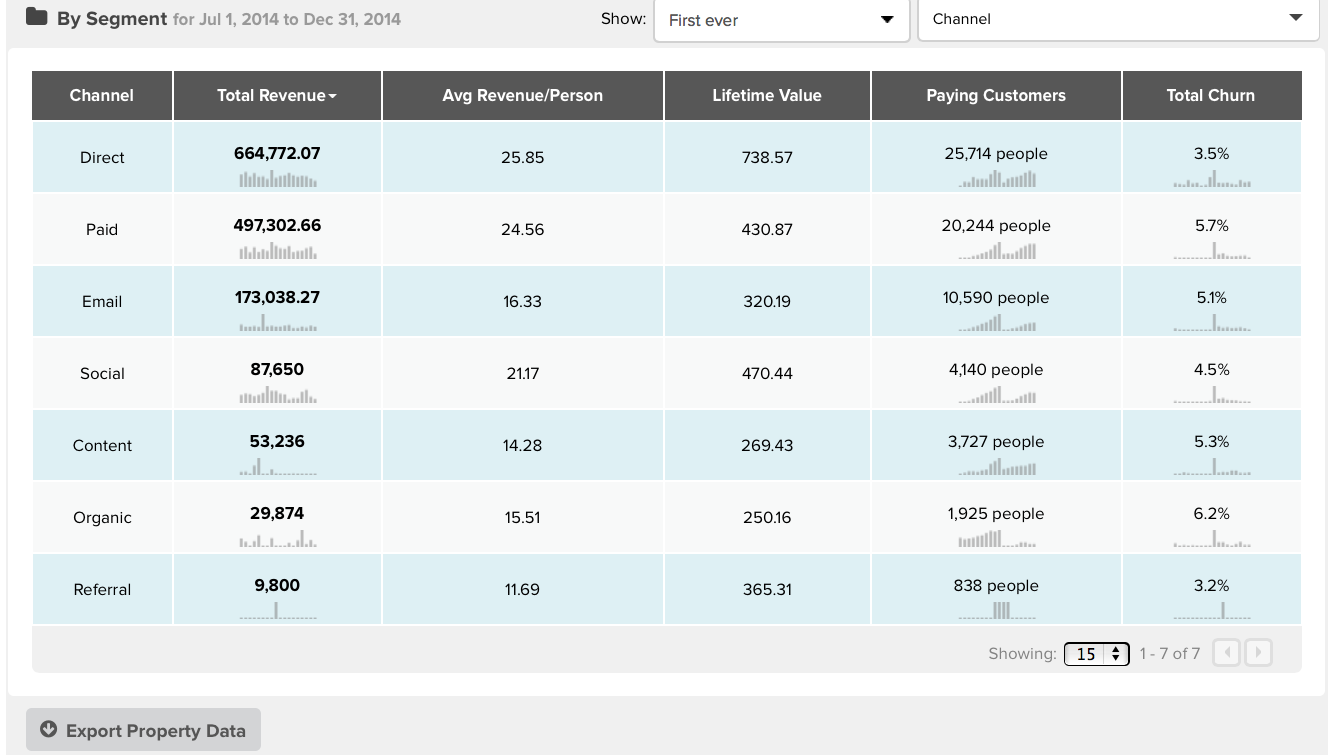
revenue-report-seven-campaigns-kissmetrics


Gauging the total revenue, average revenue/customer and the lifetime value of customers from the Kissmetrics channel property dashboard


So if you've been struggling to wring measurable ROI out of things like social media campaigns, these kind of reports can deliver the insights you've been looking for, along with the concrete numbers beloved by the boardroom.


Moving Forward with Confidence


With all this talk of marketing investment, return-in-investment, budget buy-in and confidence, you could say that a great deal of stress in trying to “prove” the best outlets for spending is putting increased pressure on today's marketing teams.  That being said, however, our focus is shifting more toward measurable results as they relate to people, not programs – paving the way for more insightful tools that help us unlock a bit more of buyer behavior as we continue to map the customer journey.


But as marketers reading about marketing spending and measurement, we'd like to hear what you think.  In your own experience, have you found the findings noted here to be true for your own work? Or do you feel that the end goal as to what constitutes “measurable” is constantly being moved? We'd love to hear your feedback and thoughts, so why not share with us in the comments below?


About the Author: Sherice Jacob helps business owners improve website design and increase conversion rates through compelling copywriting, user-friendly design and smart analytics analysis. Learn more at iElectrify.com and download your free web copy tune-up and conversion checklist today! Follow @sherice on Twitter, LinkedIn or Google+ for more articles like this!